TL;DR
- Semrush is the default shortlist for businesses needing keyword, competitor and website research in one platform.
- Ahrefs suits backlink research; Surfer suits content optimisation; Screaming Frog suits technical website checks.
- ChatGPT helps organise briefs, but its output needs factual review and independent search data.
- Google Search Console measures Google search performance; it is not an AI SEO tool.
- Setsail Marketing connects SEO tool findings to customer research, execution and reporting against business goals.
Why this matters
You do not need another dashboard if nobody can explain which pages attract suitable buyers or what stops those buyers from enquiring. Choose software around a decision: which demand to pursue, which page to improve, or which technical problem to fix.
Setsail Marketing starts with how customers discover, compare, trust and choose a business. That distinction matters here: tools supply evidence and suggestions, but customer understanding determines what deserves action.
For a Vancouver contractor, a useful outcome is more enquiries for jobs the team wants. For an ecommerce business, it is profitable orders. Neither outcome follows automatically from a higher content score.
What makes the best AI SEO tools?
Use these criteria to assess your 2026 shortlist before booking demonstrations:
The best tool addresses a bottleneck your team can act on. A content platform is not the answer to an unreviewed technical backlog, and a crawler is not a substitute for customer interviews.
AI SEO tools at a glance
The order below starts with broad research, then moves through distinct jobs. These are buying recommendations by use case, not measured performance rankings.
Semrush
- Best for: Broad SEO research
- Standout capability: Keyword, competitor and site-audit research
- Key limitation: Breadth creates work unless priorities are clear
Ahrefs
- Best for: Backlink research
- Standout capability: Investigating referring sites and competing pages
- Key limitation: Link data does not establish lead quality
Surfer
- Best for: Content optimisation
- Standout capability: Search-focused content analysis and editing guidance
- Key limitation: Content scores do not establish accuracy or buyer relevance
Screaming Frog SEO Spider
- Best for: Technical website diagnosis
- Standout capability: Crawling pages and inspecting technical elements
- Key limitation: Findings need interpretation and implementation
ChatGPT
- Best for: Brief development
- Standout capability: Organising supplied research into outlines and drafts
- Key limitation: Generated statements require verification
Google Search Console
- Best for: Google search measurement
- Standout capability: First-party performance and indexing information
- Key limitation: Not an AI writing or competitor-research tool
1. Semrush: best AI SEO toolkit for broad research
Semrush brings keyword research, competitor analysis and site auditing into a broad SEO platform. Use it to investigate opportunities across a website rather than starting with isolated article ideas.
For example, a business expanding its service offering can compare relevant search topics, examine competing pages and check its own website for issues. The useful output is a prioritised action list, not an export of every available keyword.
Semrush pros:
- Covers several research tasks within one platform.
- Supports comparisons between your website and competing domains.
- Helps connect keyword opportunities with website-audit findings.
Semrush cons:
- Its range requires someone to set priorities and review findings.
- Third-party estimates are not your actual enquiries or revenue.
Best for: Marketing teams that need a broad research workspace and have capacity to implement recommendations.
Verdict: Buy if broad research is your bottleneck; skip if you only need a narrowly defined task.
2. Ahrefs: best SEO research tool for backlink analysis
Ahrefs supports backlink analysis, keyword research and investigation of competing content. Its backlink tools help you examine which websites link to a domain and which pages attract those links.
Use that evidence to identify relevant publications, associations and resources worth understanding. A competitor's link is a research lead, not proof that your business should pursue the same placement.
Ahrefs pros:
- Makes referring domains and linked pages available for investigation.
- Supports research into competing pages and search topics.
- Helps connect link research with content planning.
Ahrefs cons:
- Backlink counts alone do not establish relevance or commercial value.
- Research still needs editorial judgement and relationship-building work.
Best for: Teams investigating industry references, competing content and relevant opportunities to earn mentions.
Verdict: Buy for a defined backlink-research programme; hold if nobody owns the follow-through.
3. Surfer: best AI SEO tool for content optimisation
Surfer provides content analysis and editing guidance informed by search results. It suits teams that already know which page they need and want a structured way to review its coverage.
Use its recommendations as questions for an editor, not instructions to accept automatically. A service page must explain your actual offer and proof, even when competing pages cover different ground.
Surfer pros:
- Gives writers a structured content-review workflow.
- Helps identify topics to investigate during editing.
- Supports revisions to existing pages as well as new drafts.
Surfer cons:
- A content score does not verify factual accuracy.
- Following suggestions mechanically can weaken a page's focus.
Best for: Editorial teams with established briefs, subject expertise and a regular optimisation workload.
Verdict: Buy when content review is the constraint; skip if customer research and positioning remain unresolved.
4. Screaming Frog: best SEO tool for technical diagnosis
Screaming Frog SEO Spider crawls websites so you can inspect elements such as response codes, page titles, canonical tags and internal links. It belongs in this comparison as a technical tool, not as a replacement for strategy or writing.
Use it when you need to understand how pages connect or investigate a suspected technical problem. A crawl identifies conditions to examine; it does not decide which fix matters most to your business.
Screaming Frog pros:
- Makes technical website elements available for detailed inspection.
- Helps investigate broken links and redirect behaviour.
- Supports checks before and after website changes.
Screaming Frog cons:
- Findings require technical interpretation.
- Fixes often depend on developer access and testing.
Best for: SEO specialists and developers responsible for diagnosing and checking website changes.
Verdict: Buy when someone can investigate and implement findings; hold if the report will sit untouched.
5. ChatGPT: best AI tool for developing SEO briefs
ChatGPT can organise supplied research, propose outlines and draft text for review. Give it customer questions, approved facts and a clear purpose rather than asking it to invent a content strategy.
For example, supply anonymised sales objections and ask for a service-page outline that answers them. Then verify every proposed claim and compare the outline with actual search evidence.
ChatGPT pros:
- Turns scattered notes into a structured working draft.
- Supports alternative explanations and outline formats.
- Helps editors identify questions a draft leaves unanswered.
ChatGPT cons:
- Can generate incorrect statements and unsupported references.
- Does not independently establish your customers' priorities or business facts.
Best for: Teams with verified source material and an accountable human editor.
Verdict: Buy for a supervised drafting workflow; skip autonomous publishing.
6. Google Search Console: best starting point for measurement
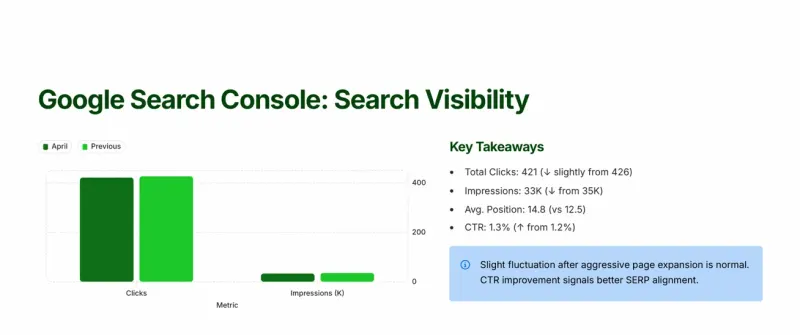
Google Search Console reports information about your site's performance in Google Search and its indexing status. It is not an AI SEO tool, but it provides an essential reference for assessing search work.
Use query and page information to investigate where your website receives impressions and clicks. Compare those findings with enquiry or order records before deciding whether the traffic supports your goals.
Google Search Console pros:
- Provides first-party information about your own Google search performance.
- Connects search queries with page-level investigation.
- Supports indexing checks and URL inspection.
Google Search Console cons:
- Does not report the full customer journey through to profit.
- Does not replace competitor research, content editing or a detailed crawler.
Best for: Website owners establishing a measurement baseline before expanding their software stack.
Verdict: Use as a baseline; skip treating clicks as a complete business result.
Turn tool findings into work that gets finished
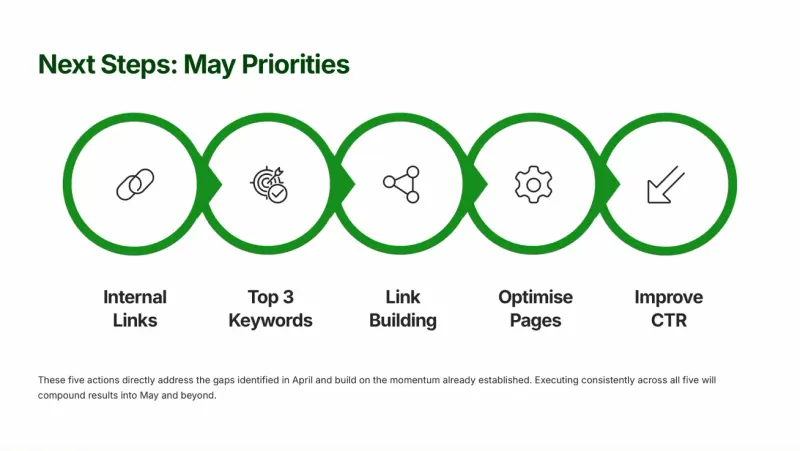
A useful 2026 workflow connects research to an owner, an approved change and a result. Keep it small enough to inspect before expanding it across your website.
Research only becomes useful when it changes a page and the result is checked.
For an initial review, choose 10 customer questions as a manageable working sample, not a claim about market size. Record which pages answer them, what proof is missing and who owns each change. Review the resulting enquiries with the sales team rather than reporting content production alone.
How these recommendations were ranked
This 2026 shortlist matches each tool's established purpose to the criteria above. It is not a hands-on benchmark, a ranking-accuracy study or a promise of improved results.
Semrush takes the broad-research slot; the other recommendations serve narrower jobs. No recommendation assumes that a competitor lacks research, editorial controls or accountability.
Setsail Marketing's SEO approach connects customer research with strategy, in-house execution and measurement. The people establishing the strategy remain involved during delivery, and reporting compares projected and actual results, including shortfalls.
Which AI SEO tools should you choose?
Choose Semrush if you need a broad research platform and have someone ready to act on it. Choose the specialist option instead when your bottleneck is already clear: backlinks, content review, technical diagnosis or brief development.
If your measurement is unclear, start with Google Search Console and your business records before adding software. For your 2026 plan, define success as a business outcome and name the person responsible for implementation.
Setsail Marketing is best for organisations that want SEO research carried through to in-house execution and business-result reporting. That is a service decision, separate from choosing a software subscription.
Book a Growth Strategy call if you need help identifying the constraint. The call is free, 30 minutes and without commitment. A subsequent researched Growth Strategy is a separate paid engagement; it includes a fixed 90-day delivery plan, and you keep the strategy whether or not you continue.
Book a Growth Strategy call
A free, 30-minute call to discuss your goals, customer journey and marketing gaps. No commitment.
FAQ
What's the best AI SEO tool for a business?
Semrush is the default shortlist for broad SEO research in this guide. Choose a specialist tool instead when you already know whether the problem is technical diagnosis, content review, backlinks or drafting.
Is Ahrefs better than Semrush?
Ahrefs is the recommendation here for backlink research; Semrush is the recommendation for broad research across several SEO tasks. Compare them against the work your team will actually complete rather than treating either as a universal winner.
Can ChatGPT replace an SEO specialist?
ChatGPT does not replace accountability for SEO research, implementation and measurement. It can organise supplied evidence and draft material, but someone must verify claims, approve changes and evaluate business results.
Does a high Surfer score guarantee rankings?
A high Surfer score does not guarantee rankings or sales. Treat its recommendations as editorial inputs, then check factual accuracy, customer relevance and whether the page answers the intended question.
Do I need Screaming Frog if I have Google Search Console?
Screaming Frog and Google Search Console serve different purposes. Search Console reports information about Google search and indexing; Screaming Frog lets you crawl and inspect technical elements across your website.
Can AI SEO tools prove that assistants recommend my business?
Generated summaries alone do not prove that an assistant recommended your business. Retain the exact question, response, date and cited sources when checking a mention, and distinguish a mention from a recommendation.
How should I measure whether SEO tools are helping?
Measure completed improvements and their relationship to qualified enquiries, orders or agreed business goals. Use search metrics to investigate performance, not as a substitute for commercial results.
One last thing
Before renewing your 2026 software stack, ask which finding last changed a page, an offer or a sales conversation. If nobody can name one, review the workflow before adding another subscription.
Setsail Marketing connects that decision to why customers buy. Keep the tools your team uses to make better decisions—not the ones that produce the longest reports.
Related guides
- How an SEO agency should verify mentions of your business
- What a Vancouver SEO agency should report each month
- What access a Vancouver SEO agency actually needs
- How to give a marketing agency a useful customer brief