Ecommerce Website Development and Marketing for eBikeBC

Our work for eBike BC
eBikeBC needed an online store that helped customers make a considered electric-bike purchase. We redesigned the shopping experience around specifications, product comparison and a clearer checkout, supported by product photography and lifestyle content. Google and Meta campaigns connected seasonal offers with dedicated landing pages. The project combined ecommerce website development, content and campaign tracking for a Western Canadian retailer, with reported improvements in online conversions and mobile checkout completion after launch. The store gave buyers more of the information they would normally ask for in person.
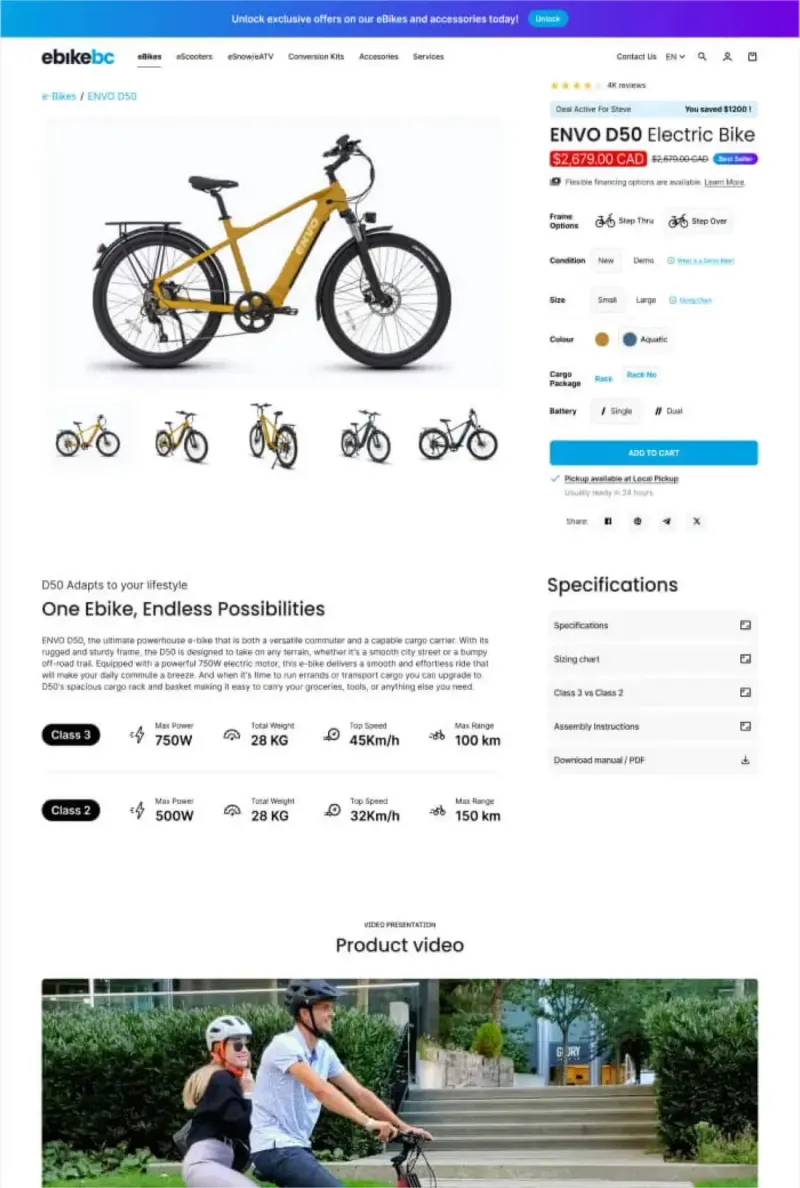
Product comparison and a clearer checkout
We organized the site around the way people compare bikes, including size, terrain and intended use. Filters, specifications and comparison tools helped customers narrow the range. The project reported lower bounce rates and improved conversions across devices after launch.
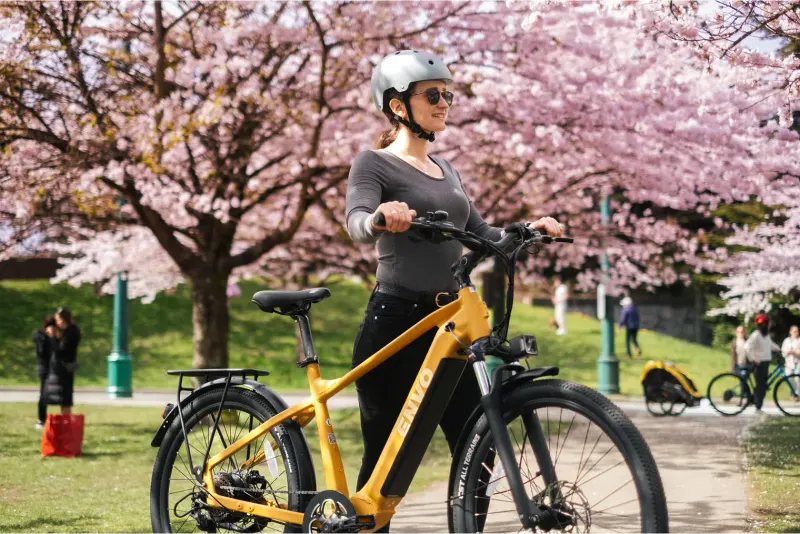
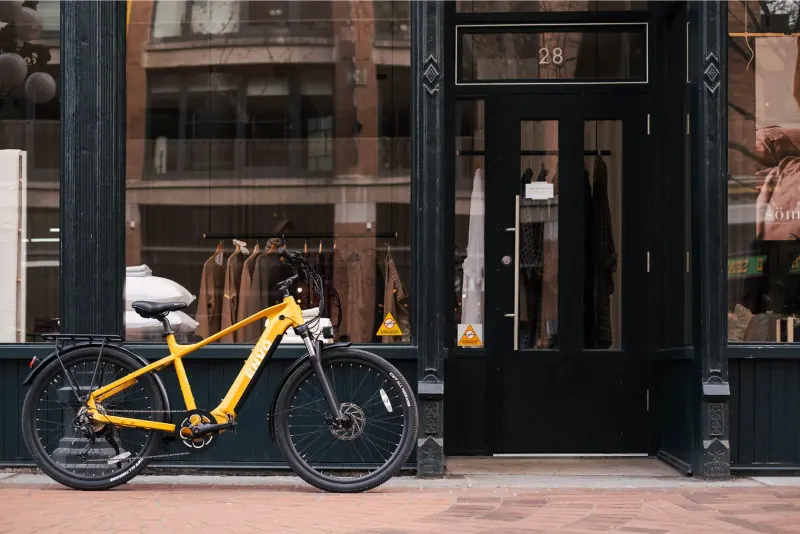
Photography showing the bikes and their details
Studio and lifestyle photography showed the products in detail and in use. The content addressed questions about features and fit that are harder to answer online, giving customers more information before they moved to checkout.
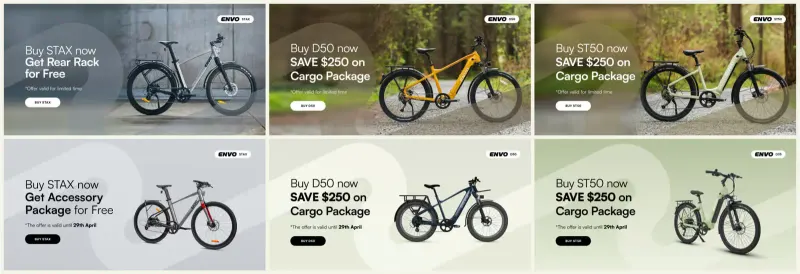
Seasonal advertising with dedicated landing pages
We connected Google and Meta campaigns with seasonal promotions, bundles and dedicated landing pages. Conversion tracking allowed the team to review campaign response, including the reported revenue return from targeted seasonal offers.
Helping eBikeBC customers compare and buy online
Context & Challenge
eBikeBC’s website worked, but it did not provide enough support for a considered online purchase. Customers needed to compare models, understand specifications and assess fit before choosing a bike. In Western Canada’s competitive electric-bike market, the site needed to support the questions customers would ask in store as well as provide a checkout.
The challenge was clear:
- Their existing ecommerce site lacked robust product comparison tools and a user-friendly checkout process.
- Product photography and lifestyle visuals didn’t reflect the premium nature of their bikes.
- Digital marketing efforts were limited and disconnected from the website’s customer journey.
Electric bikes are a substantial purchase, so unanswered questions can interrupt the buying process. We needed to rework the website and its product information together, supported by useful imagery and campaigns that brought people to the right offer. Improving the route from discovery to checkout was the reference for those decisions.

Approach & Strategy
Our first step was to audit eBikeBC’s current website and marketing ecosystem. We mapped out the full customer journey, from discovery on social media or Google Ads through to checkout. This analysis revealed several opportunities:
- Better product discovery tools (filters, sizing guides, comparison charts) were needed to guide customers through complex product configurations.
- Visual storytelling through photography and video would help bridge the gap between online and in-person bike sales.
- Targeted campaigns needed to drive high-intent traffic, supported by custom landing pages that addressed buyer concerns upfront.
Our strategy combined three core pillars of Setsail’s services:
- Ecommerce Website Development: A complete redesign focused on mobile-first performance and speed.
- Content Creation: Professional product photography, lifestyle shoots, and short-form product videos.
- Performance Marketing: Paid campaigns on Google and Meta, optimised for ROAS and supported by conversion tracking.
Creative Process
Our ecommerce design work began with eBikeBC’s product managers. We reviewed each model’s features and the questions buyers raised about range, terrain, sizing and warranty. That product knowledge informed the comparison tools and content, drawing on our work in the eMobility industry.
Behind-the-scenes, we conducted:
- Studio shoots for crisp, detailed product photos (ideal for ecommerce product pages).
- Lifestyle photo and video shoots across British Columbia, capturing the real-world utility and excitement of eBikes.
- Content scripts for feature highlight videos and short social media clips.
On the design side, we prototyped the site architecture in Figma, ensuring the buyer journey felt intuitive. We created comparison tools and interactive guides that allowed customers to see which model matched their riding style and budget.
Execution & Deliverables
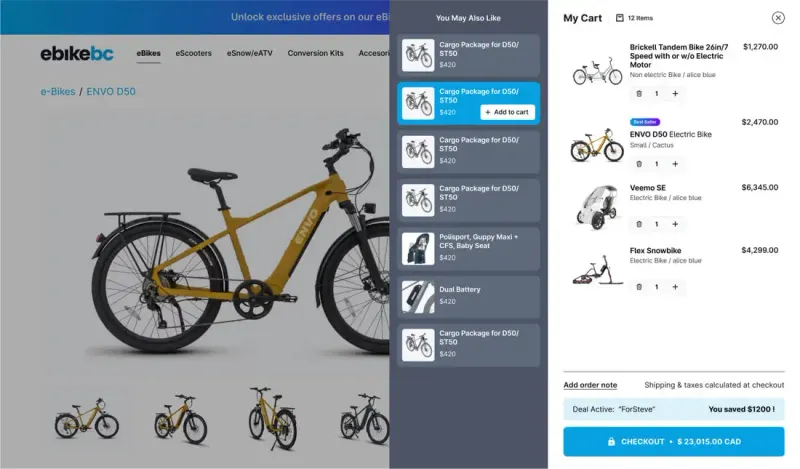
Our development team implemented a fully custom ecommerce solution, integrating advanced filtering, inventory syncing, and a streamlined checkout process. Each product page was built to highlight key selling points (e.g., battery range, weight, motor power), supported by visual content we produced in-house.
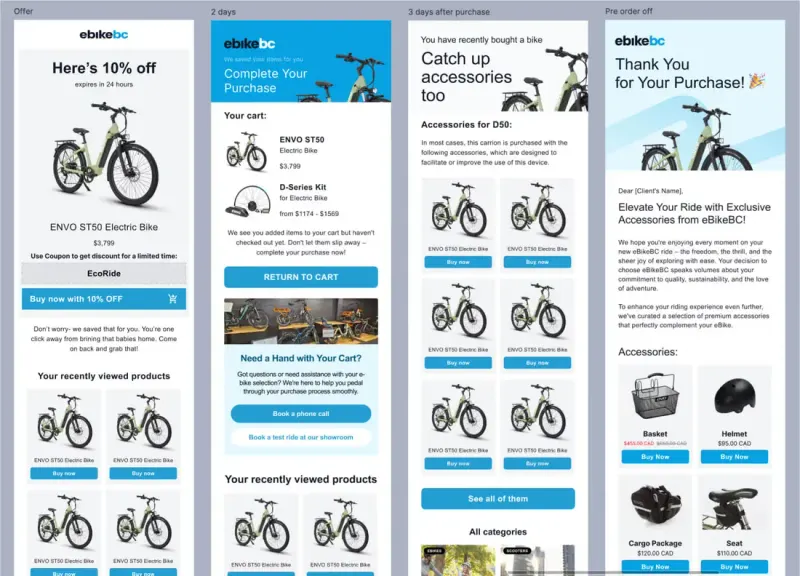
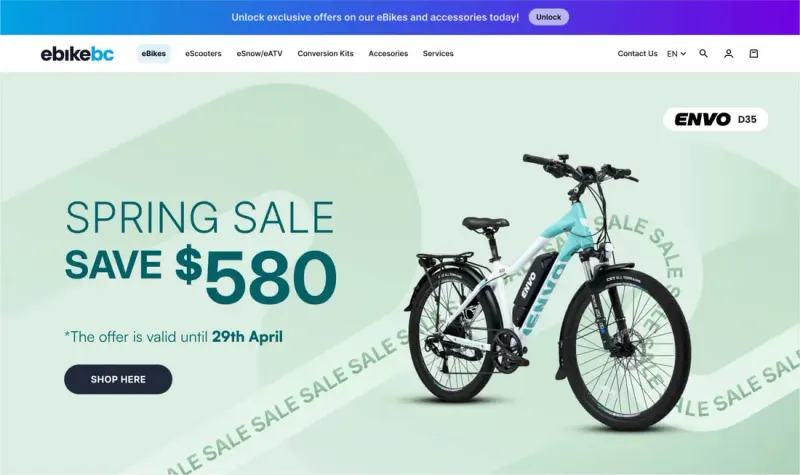
We also built landing pages for seasonal promotions (e.g., “Save $250 on Cargo Packages”), which were tied directly to Google Search and Meta campaigns.
Key deliverables included:
- A conversion-focused ecommerce site with mobile-first design.
- 100+ professional product and lifestyle images optimised for web.
- 3 promotional video clips for ad campaigns and social media.
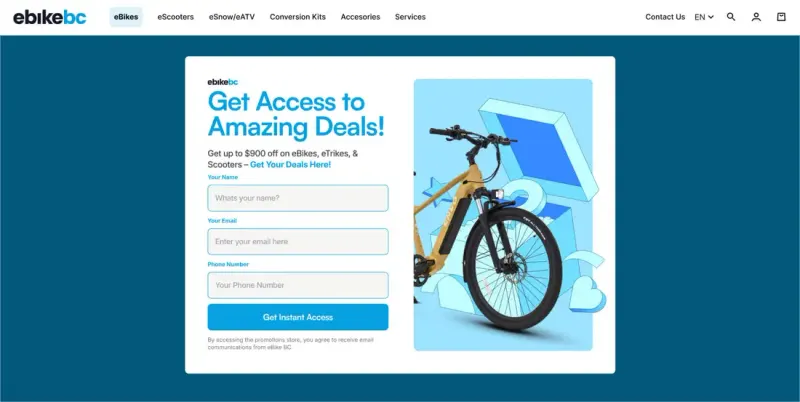
- Custom landing pages for PPC campaigns with built-in analytics.
- Complete marketing automation setup for lead capture and remarketing.
Tangible Outcomes (KPIs & Business Impact)
Our integrated approach delivered measurable growth:
- +35% increase in online conversions within the first quarter post-launch.
- +50% improvement in mobile checkout completion thanks to UX optimisations.
- PPC campaigns generated a 4.3x ROAS on targeted seasonal offers.
- Organic traffic grew +28% after launch due to improved site speed, structured data, and optimised product content.
Lessons Learned & Next Steps
For a considered purchase, visual content needs to answer practical questions. Electric-bike buyers look for specifications, feature detail and enough context to judge whether a model suits them. The product and lifestyle content worked alongside the filters and comparison tools, so visitors could research the range before reaching the checkout.
Going forward, we are partnering with eBikeBC to:
- Expand their SEO strategy with content around “Best electric bikes for BC terrain” and similar high-intent search topics.
- Continue A/B testing landing pages to refine checkout flows.
- Launch retargeting campaigns using the content library we’ve built.
Project FAQs
What makes a good ecommerce website for electric bike retailers?
A good ecommerce website for electric bike retailers should include comparison tools, detailed specs, and mobile optimization. Customers want to filter bikes by terrain, range, and size. Fast load times, secure checkout, and product photography also play a big role in driving conversions.
How does performance marketing help sell high-ticket ecommerce products?
For eBikeBC, Google and Meta campaigns connected seasonal offers with dedicated landing pages and remarketing. Conversion tracking helped the team review the response. A high-ticket purchase also needs clear product comparisons and follow-up, because a shopper may research several times before ordering.
Why is professional photography important for ecommerce bike stores?
Product photography can show details an online buyer would otherwise inspect in a shop: motor placement, frame, accessories and proportions. For eBikeBC, studio and lifestyle images worked beside specifications and comparison tools, helping shoppers understand the range before reaching checkout.
What digital marketing services work best for electric mobility brands?
Electric-mobility brands need to explain the products, help buyers compare options and provide a clear route to purchase. For eBikeBC, the work combined ecommerce development, photography, video, SEO and paid campaigns around that journey. The service mix should follow the product range and the questions customers need answered.
How do I get started with Setsail Marketing?
Book a Growth Strategy call with Setsail Marketing to discuss your electric-mobility or ecommerce project. We’ll review the current site, product range, customer questions and campaign activity to identify where website development, content or paid media work is needed.