
Our work for Wunderkids
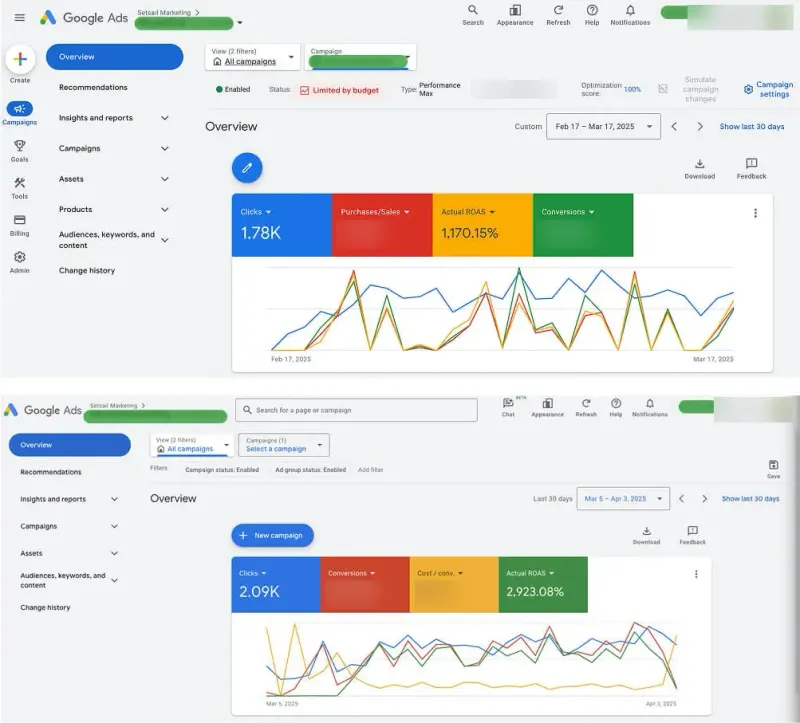
Wunderkids, a Canadian DTC baby-products brand, needed to bring customer-acquisition costs under control as it grew. We structured Google Performance Max campaigns by product type and developed static and video advertising for parents and gift buyers. Target ROAS bidding, conversion tracking and ongoing creative reviews supported the campaign decisions. The reported results included 1,170% ROAS, a 195% increase in conversion value and a lower CPA. The creative showed how the play mats, playpens, sofas and foam blocks fit into family homes.

Product-level campaigns for the baby-products range
We organized the PPC activity by play mats, playpens, sofas and foam blocks, making it easier to compare performance across the range. The reported results included a 195% increase in conversion value and lower CPA, with product-level information available for budget decisions.
Performance Max management and Target ROAS bidding
We used Target ROAS bidding within Google Ads Performance Max and reviewed spend against asset-group performance. Overall reported ROAS reached 1,170%, with a peak of 1,370% in the strongest asset groups. Those measures guided the ongoing campaign reviews.
Video creative showing the products in use
The video ads showed the products in a family setting, with messaging about safety, sustainability and design. Customer testimonials were included alongside the product footage, giving parents and gift buyers a way to understand the range beyond a static product image.
Key Deliverables & Outcomes
Ecommerce Marketing Challenge for a Sustainable Baby Brand
Wunderkids was a Canadian DTC brand with a range of play mats, playpens, sofas and foam blocks. Its positioning emphasized sustainability, child safety and design. We needed to reflect those priorities in the advertising while helping parents and gift buyers understand the products and how they would fit into a home.
The business needed to manage customer acquisition costs as it grew. Organic activity provided awareness, but the paid-media programme was not yet delivering the consistency the team wanted. We reviewed how the products were grouped, how conversions were tracked and what the creative communicated before planning the campaign changes.

Our role was to connect the product offer with campaign structure, creative and measurement. Wunderkids needed to see where acquisition spend was going and which parts of the range were producing conversion value. We built a campaign and creative system that allowed those questions to be reviewed together as the advertising ran.
Performance Marketing Strategy to Scale DTC Growth
The work combined product-level campaign structure, automated bidding, and creative based on customer priorities. Each part served a different purpose: the structure separated the range, bidding responded to conversion signals, and the creative explained why a parent or gift buyer might choose the product.
- Smart Architecture: Instead of lumping all products into one campaign, we broke campaigns down by product category: play mats, playpens, sofas, and foam blocks. This allowed us to see what was performing best, and shift budget where it counted most.
- AI-Driven Optimization: We leaned into Google’s Performance Max campaigns, which allowed us to run across Search, Shopping, YouTube, Display, and Gmail simultaneously. With Target ROAS bidding, the campaigns could adapt in real time, allocating more budget to the highest-performing ads.
- Values-Based Creative: Wunderkids’ buyers are not just shopping for baby products. They’re shopping for safety, sustainability, and peace of mind. We built ad creative that emphasized design quality, eco-friendly materials, and real customer testimonials. Importantly, we added video ads that brought the products to life in use, helping parents see these products in their homes.

Creative Process: PPC Ads and Video Content for Ecommerce
We used custom intent keywords such as “baby play mat” and “eco-friendly playpen” alongside Google’s audience signals. The audiences included new parents, gift buyers and eco-conscious shoppers, combining people researching a product with buyers whose interests matched the range. The campaign still needed clear creative to explain Wunderkids to someone encountering the brand for the first time.
Our team created static display ads and product showcase ads, alongside video ads. Lifestyle footage showed the products in use, with messages about durability, child safety and design. Testimonials added another perspective for prospective buyers. The formats gave the team different ways to present and test the same product themes.
We kept Wunderkids’ brand identity consistent across the placements, including YouTube pre-roll and Gmail. The visual treatment matched the website, so someone moving from an ad to a product page would encounter the same product presentation rather than a disconnected campaign style.









Execution: PPC Management, Video Ads, and Conversion Tracking
Once the strategy and creative were finalized, we executed in four main streams:
- Campaign Build-Out: Performance Max campaigns were launched with separate asset groups by product category, allowing us to monitor which categories drove the highest return.
- Conversion Tracking & Analytics: We set up enhanced conversions through Google Tag Manager to ensure accurate data flow. The setup supported purchase measurement for campaign review.
- Creative Deployment: Static, carousel, and video ads were rotated in, with A/B testing to identify winners quickly. We continuously tested messaging angles: safety-first, eco-conscious, and design-focused.
- Optimization & Scaling: We monitored performance daily, reallocating budget from underperformers to winners. When campaigns hit budget caps, we reviewed whether additional spend was worth testing.
Tangible Outcomes: 1,170% ROAS with Performance Marketing
The campaign reporting recorded the following outcomes:
- 1,170% ROAS overall, with peaks of 1,370% on top-performing asset groups.
- Conversion value increased 195%, as measured in the campaign reporting. This figure alone does not establish a change in order count or average order value.
- CPA dropped significantly, improving the reported acquisition-cost measure. Profitability still depends on the product margin and other costs.
- Video ads outperformed static placements, increasing engagement and improving conversion rates across YouTube and Display.
- Campaigns regularly hit budget caps, identifying a reason to test additional budget rather than assuming the same return at a higher spend.
The creative showed the products in use, with consistent messages about sustainability, child safety and design. Campaign tracking provided a separate view of engagement and conversion activity; it did not measure long-term brand trust.

Lessons Learned in Ecommerce PPC and Next Steps
For Wunderkids, video ads in ecommerce PPC provided room to show the products in context. Lifestyle footage could demonstrate their use alongside the details a parent would consider. That gave the team creative variations to test against the static product placements.
Structuring campaigns by product type made it easier to compare the range. It gave the team more useful information for reviewing ROAS and allocating spend, while profitability also required the client’s product-margin and cost information.
The customer priorities shaped the creative: safety, sustainability, product design and the experiences of other buyers. We used those themes in the advertising and reviewed the response through campaign data. The work kept the brand’s explanation consistent while allowing individual messages and formats to be tested.
For next steps, we’ve recommended scaling budgets, building more dedicated landing pages for specific products, and continuing to test video ad formats. Those tests would need to be reviewed against acquisition costs and product margins before increasing spend further.
Project FAQs
How can performance marketing help ecommerce brands scale profitably?
Performance marketing helps ecommerce teams review spend against tracked conversions and conversion value. For Wunderkids, campaign groups by product category made those comparisons more useful. Budget and creative can then be adjusted using the results, while product margins and the wider costs of acquisition still need to be considered.
Why is PPC management important for direct-to-consumer companies?
PPC lets a DTC team compare spend with tracked purchases and conversion value. For Wunderkids, product-category groups and creative tests made those comparisons more useful. The reported ROAS and CPA then informed budget reviews, alongside the client’s product margins and wider acquisition costs.
How do video ads improve conversion rates for online retailers?
Wunderkids’ video showed play mats, playpens, sofas and foam blocks in family settings, with messages about safety, sustainability and design. That gave parents and gift buyers more context than a product image alone. The campaign reporting recorded engagement and conversion differences between formats.
What role does conversion tracking play in PPC campaigns?
Conversion tracking connects campaign activity with actions such as a purchase. For Wunderkids, we used Google Tag Manager and enhanced conversions to support that measurement. Tracking needs to be checked and interpreted within its attribution limits; it is not a guarantee that every click, purchase or customer journey is captured.
How do I get started with Setsail Marketing?
Book a Growth Strategy call with Setsail Marketing to review your ecommerce offer, acquisition costs and current campaigns. We can discuss what the available data shows and where PPC management, website work or new creative could help you test a more useful approach.