A designer wallpaper store, rebuilt so every design has one page

Our work for James Crossing
James Crossing sells wallpaper and fabric by independent UK and European artists to homeowners, interior designers and hotels. Their old store listed every colour and every size as its own product, so the catalogue was hard to browse. We planned, designed and built a new Shopify store around how each of those buyers shops.

About 3,600 listings, now about 800 products
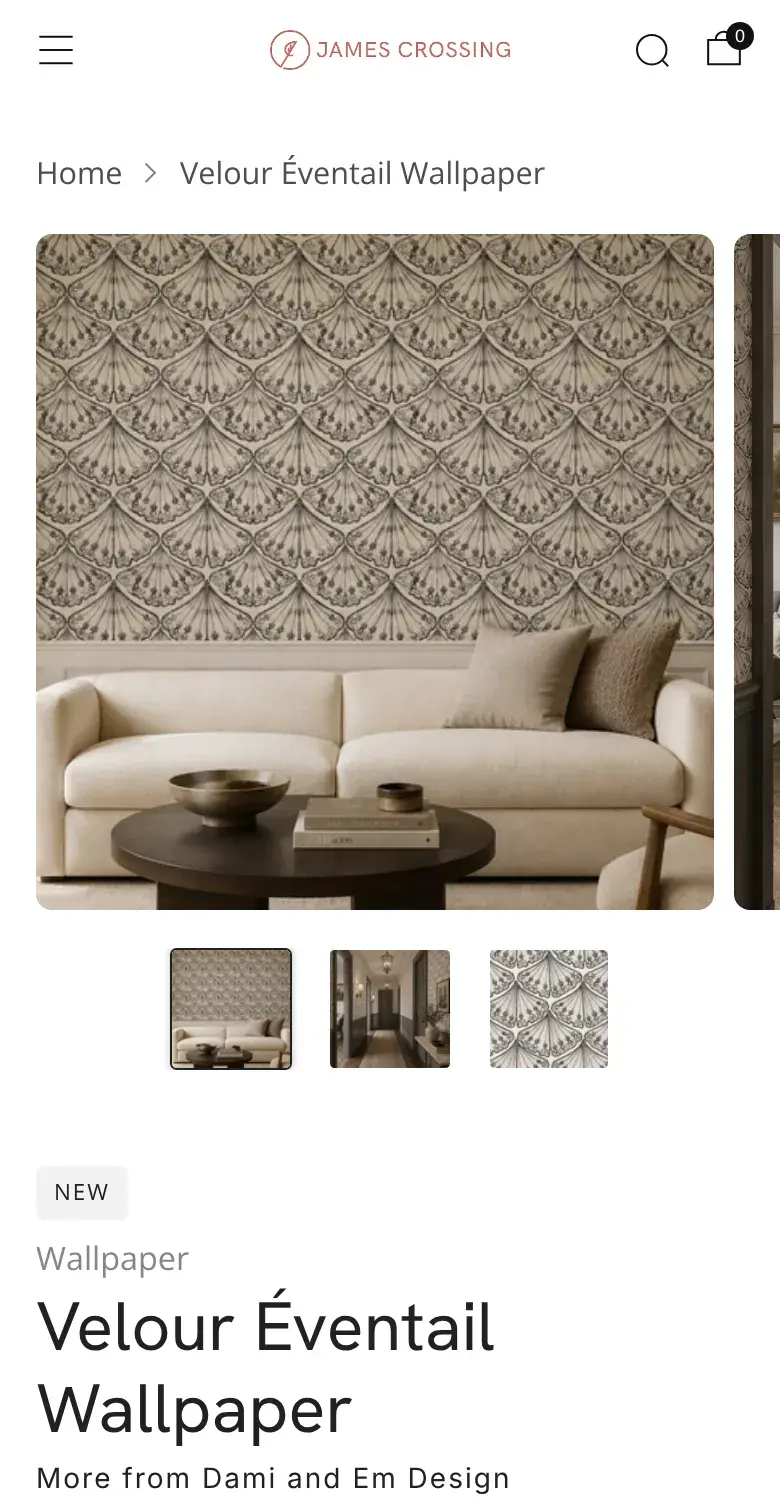
Every colour and size used to be its own listing. Now each design is one product, with its colourways side by side.

Trade accounts approved in one click
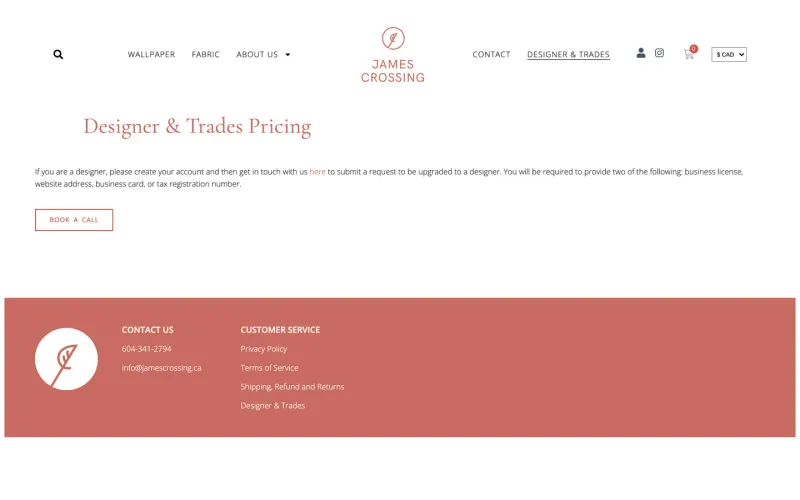
Designers apply online, get approved in one click and log in with a code by email. No more booking a meeting.

Trade pricing without Shopify Plus
Designers and wholesalers each see their own prices when they log in. Built on Shopify’s B2B tools, on the standard plan.
The goal: a store that sells without the founder in every sale.
James Crossing is a Canadian store for designer wallpaper and fabric. Every design comes from an independent artist, and many come in several colourways.
The owners wanted to rely less on trade shows. They also wanted the store to sell without the founder, Heather LaRoy, being part of every sale. So each kind of buyer needed a store they could use on their own: homeowners browsing by look, interior designers who need trade prices, and hotels and other commercial buyers who need specs.
See the store: jamescrossing.ca

Before and after
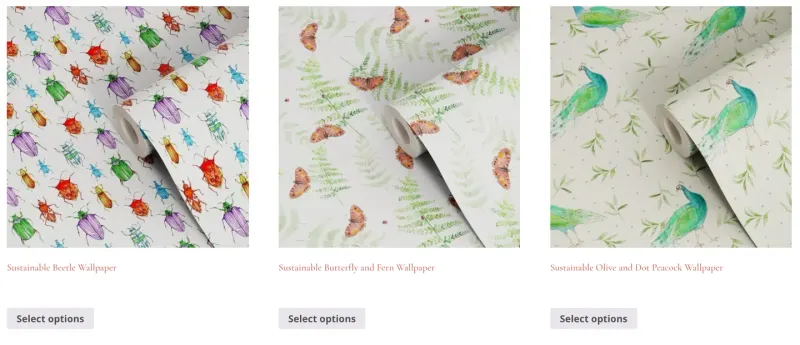
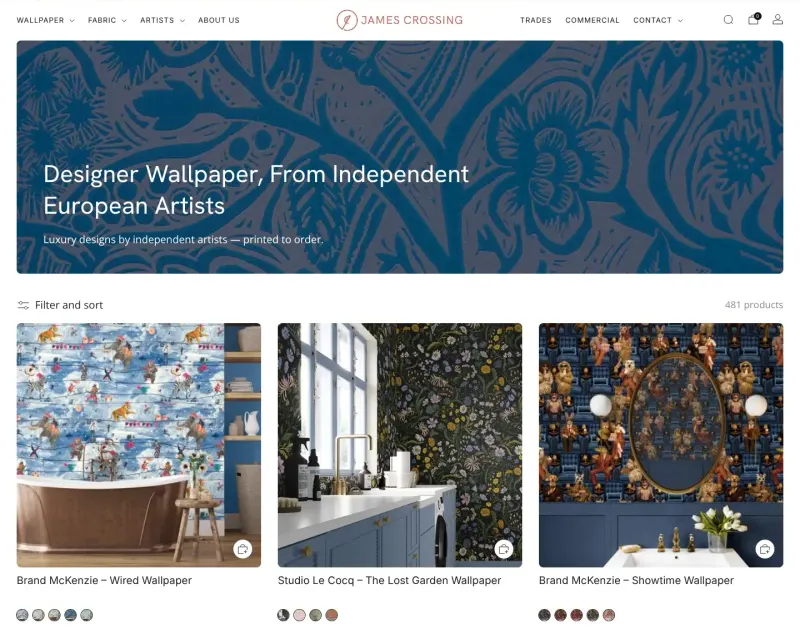
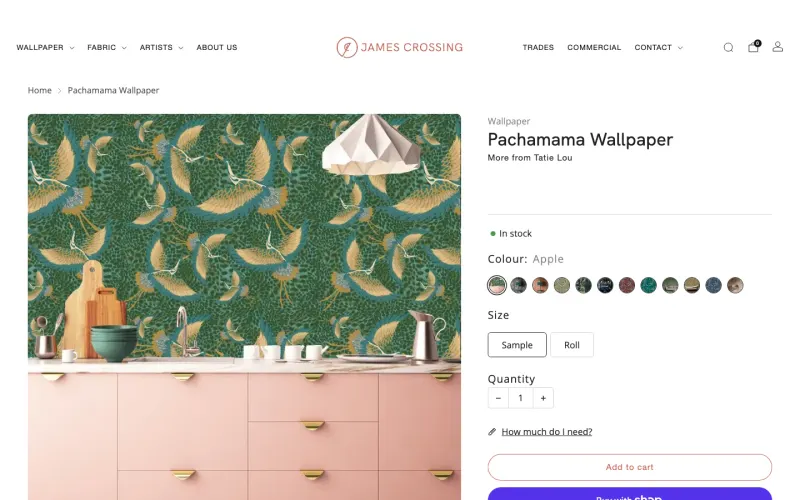
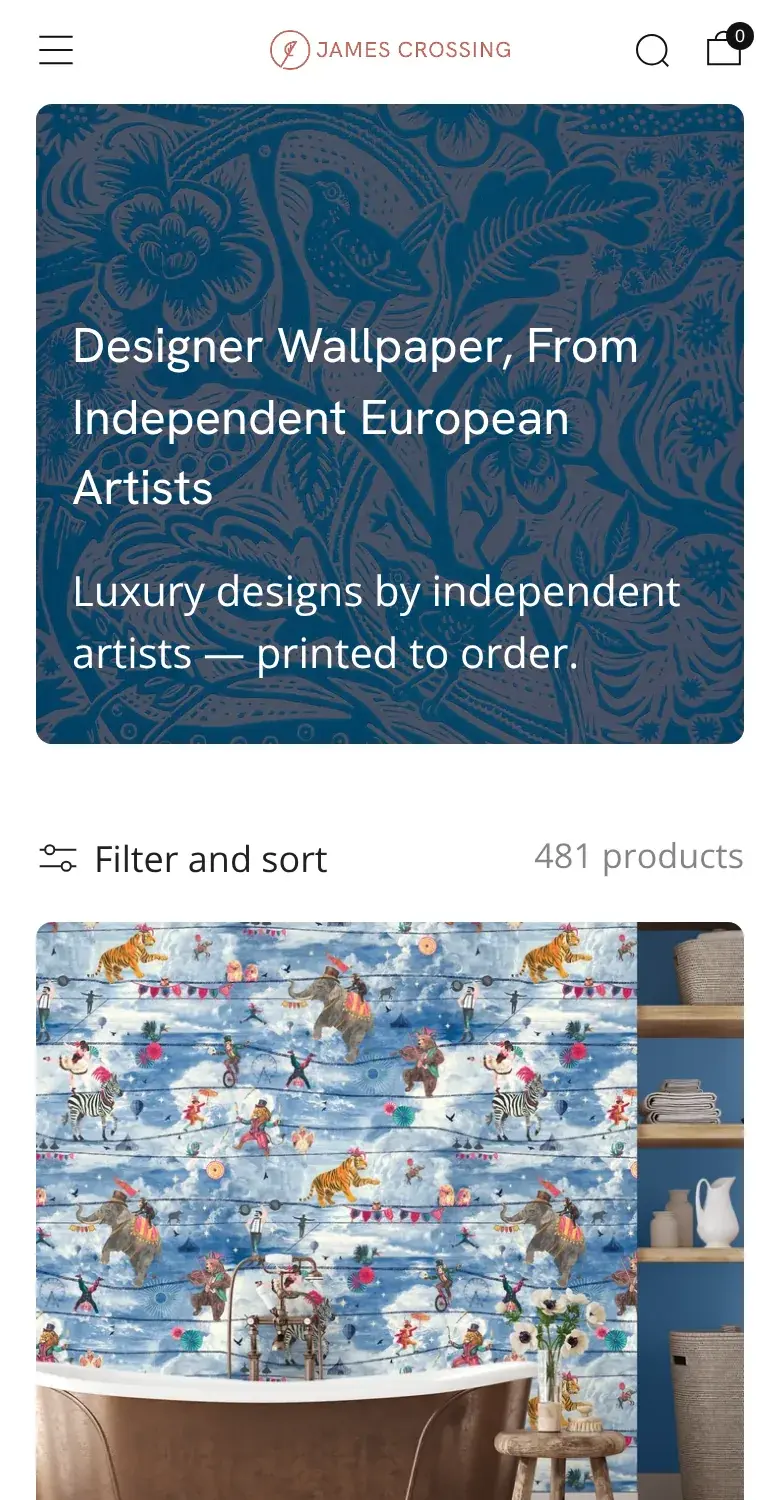
Drag the line on each picture. On the left, the old store, as saved by the Internet Archive. On the right, the one we designed and built.

Every colourway on one product
The old store listed every colour of a design, in every size, as its own product. A shopper who liked a pattern could not see its other colours on the same page.
We rebuilt the catalogue first. Colour, size (sample or roll) and scale became options on one product. Now a shopper sees every colourway of a design on one product, and switches between them in one click.
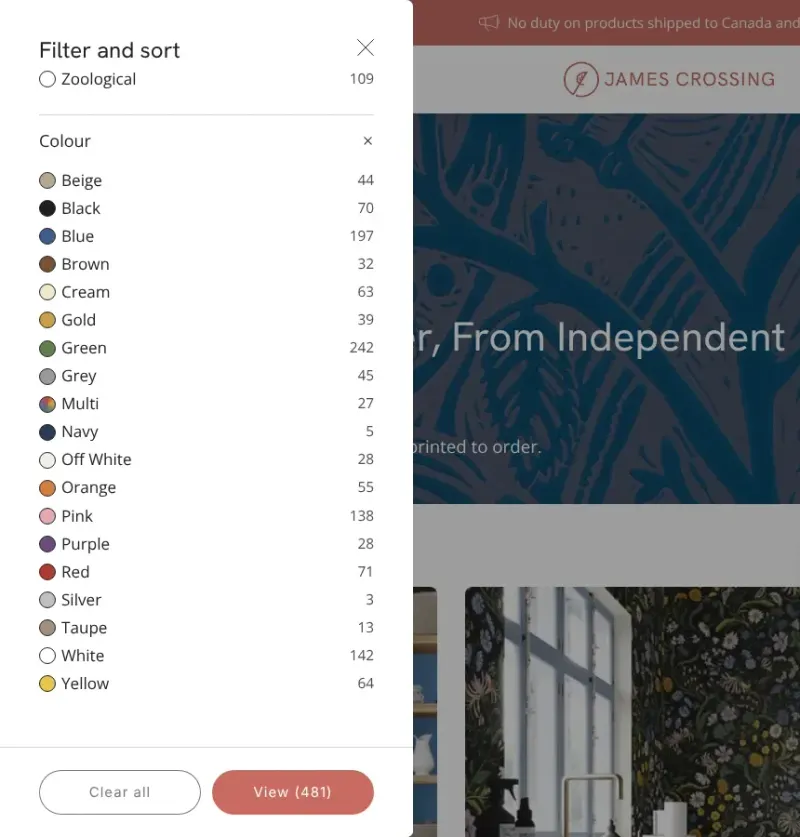
Filters that start with colour
Because colour now sits on each option, a colour filter finally works. Pick green and you see the designs that come in green. Shoppers can also filter by style, artist, type and price, and fabric adds material.
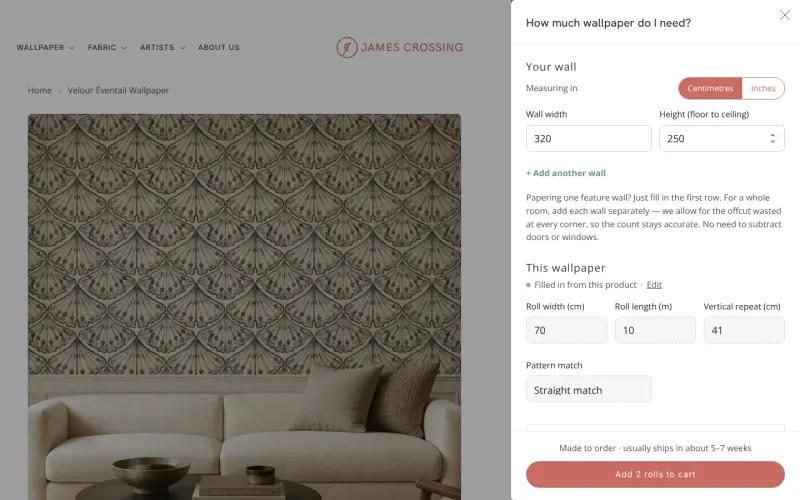
A calculator that orders the right rolls
Wallpaper buyers ask one question before anything else: how many rolls do I need? Every wallpaper page now answers it. The calculator takes up to six walls, in centimetres or inches. It fills in the roll size and pattern repeat from the product, and allows for the offcut at each corner.
Then it adds the rolls to the cart in one click. They are ordered together, so they come from one print run and the colour matches.
The designs, in real rooms
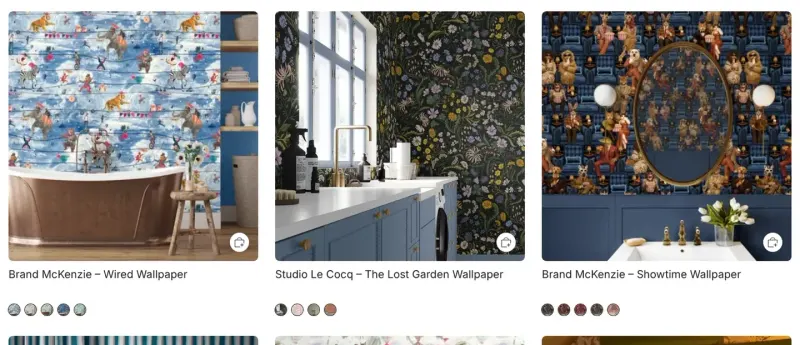
Wallpaper is hard to judge from a small swatch. So each design is shown on a real wall first: a kitchen, a bedroom, a laundry room, a hotel. Buyers can picture it in their own space before they order a sample.




Trade accounts without a meeting
Interior designers are some of James Crossing’s best buyers. On the old site, they had to book a meeting to apply for a trade account. That was the biggest barrier to designers signing up.
Now they apply online. The owners approve them with one click, and designers log in with a code sent by email, with no password to forget. Once in, they see their trade price on every product and order free samples.

Trade pricing without Shopify Plus
Separate price lists for designers and wholesalers usually push a store to Shopify Plus. We built both on Shopify’s own B2B tools instead, on the standard plan. Approved buyers see their own prices when they log in. Nobody has to phone for a quote.
A page for every artist
Buyers often shop by designer. So every artist has a page with their photo, their story, their named collections and their designs. An Artists hub and an Artists menu lead to all of them.


Three buyers, three ways in
Homeowners, interior designers and commercial buyers start in different places. The menu gives each one a path: Wallpaper, Fabric and Artists for browsing, Trades for designers, and Commercial for hotels, boutiques and other contract projects.

Built to be found
Product pages carry structured data for products, breadcrumbs and the return policy, so search engines can read them. Each style has its own page with a description and FAQs. A Google Merchant Center feed lets the products show in Google Shopping.
Working together
We worked in three stages: strategy and wireframes, then design and content, then the build and launch. The owners reviewed a test store before anything went live. We handed over a Store Handbook and a recorded walkthrough, so they add products and new swatch colours themselves.
Project FAQs
My catalogue is full of near-duplicate listings. Can you clean that up?
Yes. James Crossing's old WooCommerce store listed every colour and size as its own product. We merged about 3,600 listings into about 800 products, by our rounded estimate. Now each design has one page, with colour, size and scale as options.
How will shoppers find the right thing in a catalogue this big?
We build the filters around how your buyers search. James Crossing shoppers filter by colour, style, artist, type and price, and fabric adds material. Each artist has their own page, and hotel and commercial buyers have a page of their own. Because colour is an option on one product, a search for green shows green designs, not a pile of repeats.
My customers keep asking how much to order. Can the site answer that?
It can. James Crossing's wallpaper pages have a calculator for up to six walls, in cm or inches. The roll size and pattern repeat are already filled in from the product. One click adds the right number of rolls, all from one print run so the colour matches.
Do I need Shopify Plus to give trade buyers their own prices?
Not always. James Crossing runs a Designer price list and a Wholesale price list on Shopify's standard plan, using its built-in B2B features. Trade buyers apply online and the owner approves them in one click. They log in with a code sent by email and see their own prices.
Will I have to call you every time I add a product?
No. We handed James Crossing over with a Store Handbook and a recorded walkthrough. The owners add new products and new swatch colours themselves.
What happens on the call?
It's a free 30-minute discovery call with our sales team. You tell us about your store, your buyers and your goals. We share how we'd approach it and talk through pricing.