Healthcare Website Design and Booking Experience for No Fear Counselling

Our work for No Fear Counselling
No Fear Counselling had expanded across British Columbia, but its website made it difficult to find a therapist, location or booking route. We redesigned the site in Webflow, with a therapist directory, clearer service information and a mobile-first booking experience. The work included a calmer brand presentation, accessibility considerations and automated reminders and follow-up. After launch, the reported results included a 200% increase in online bookings, a 60% improvement in conversion rates and 85% higher mobile engagement.
A clearer route into online booking
We simplified the booking steps, service information and calls to action so clients could find the relevant appointment route. The project reported a 60% increase in conversion rates within the first three months, alongside growth in online bookings.
Accessible layouts and mobile navigation
We developed the site with WCAG 2.1 requirements and mobile navigation in view. Therapist information, locations and booking routes were organized for smaller screens, with the project reporting an 85% increase in mobile engagement after launch.
A consistent presentation for therapy services
We updated typography, colour and imagery to suit the clinic’s mental-health services. The design gave therapist profiles and service information a consistent setting, with a reported 40% reduction in bounce rate and longer time on site.
Helping clients find a therapist and book a session
Context & Challenge
No Fear Counselling needed its website to reflect the scale of its current services and make the booking process easier to follow.
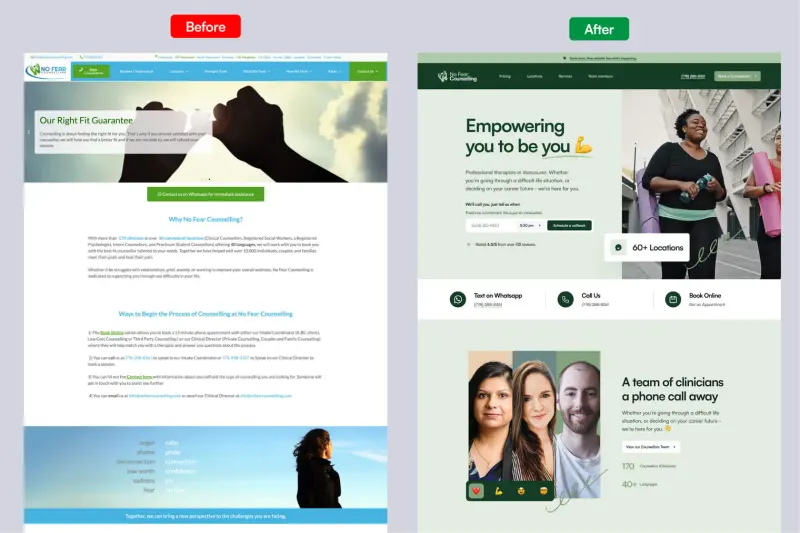
The British Columbia clinic had grown to include dozens of practitioners across several regions. The dated site was hard to navigate, and users had to work through multiple layers to find a therapist, location or form. Accessibility problems added further barriers for people trying to use the service information.
Someone looking for therapy needs clear information about the service and how to contact the clinic. Confusing forms, inaccessible navigation or unclear therapist profiles can interrupt that process. We needed to review those practical barriers while keeping the tone appropriate for people seeking mental-health support.
Our healthcare web design and UX strategy work focused on helping people find the information and contact route they needed. The site had to explain the services clearly and make the therapist directory and booking tools easier to use.
Approach & Strategy
Research sessions, stakeholder interviews and a review of other healthcare websites informed the brief. Through Vision Mapping™, we identified where the navigation and presentation made the existing site difficult to use. Two issues became priorities for the redesign:
- The site’s architecture was overloaded. Visitors had to click through multiple layers just to find the right therapist, location, or booking form.
- The tone was too clinical. Mental health care requires trust and safety. The old design lacked warmth and felt more corporate than compassionate.
We aligned on a strategy that merged four core disciplines:
- Accessible web design, guided by WCAG 2.1 and HIPAA compliance
- Marketing automation to simplify booking and improve retention
- UX-focused content strategy to clarify services and pathways
- Mental health branding to build emotional connection with users

Creative Process
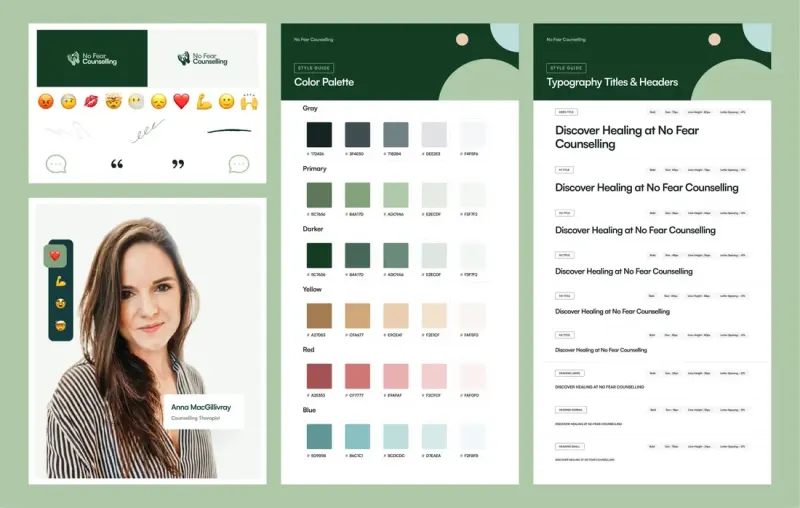
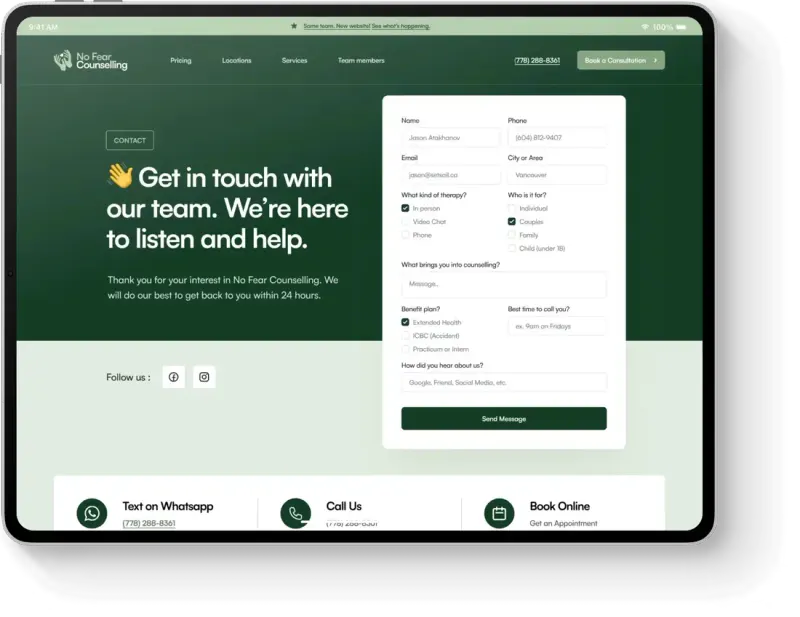
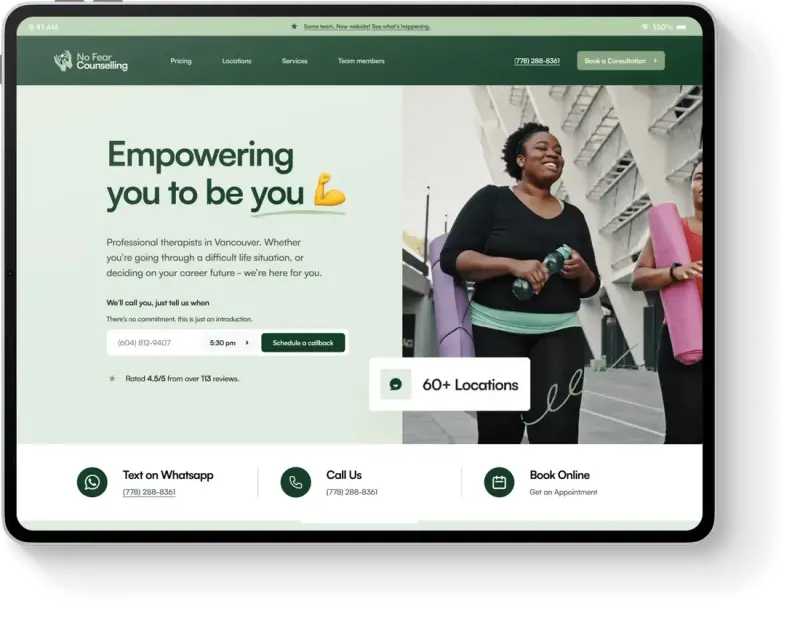
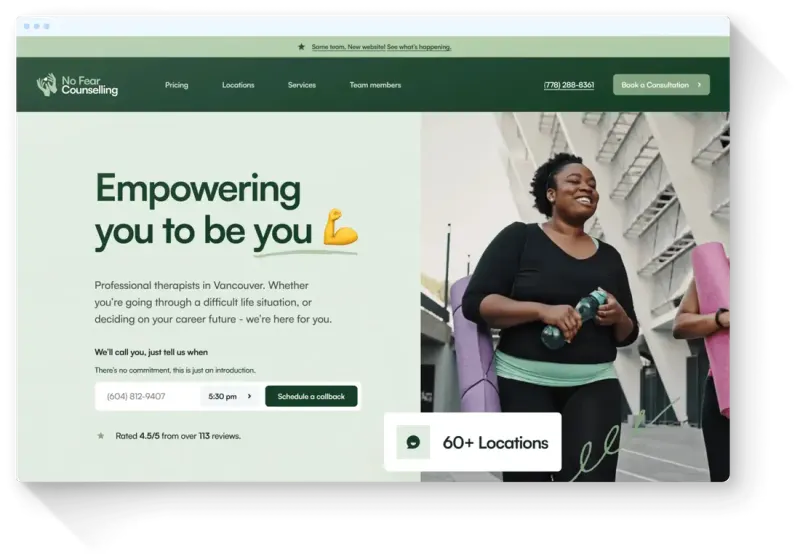
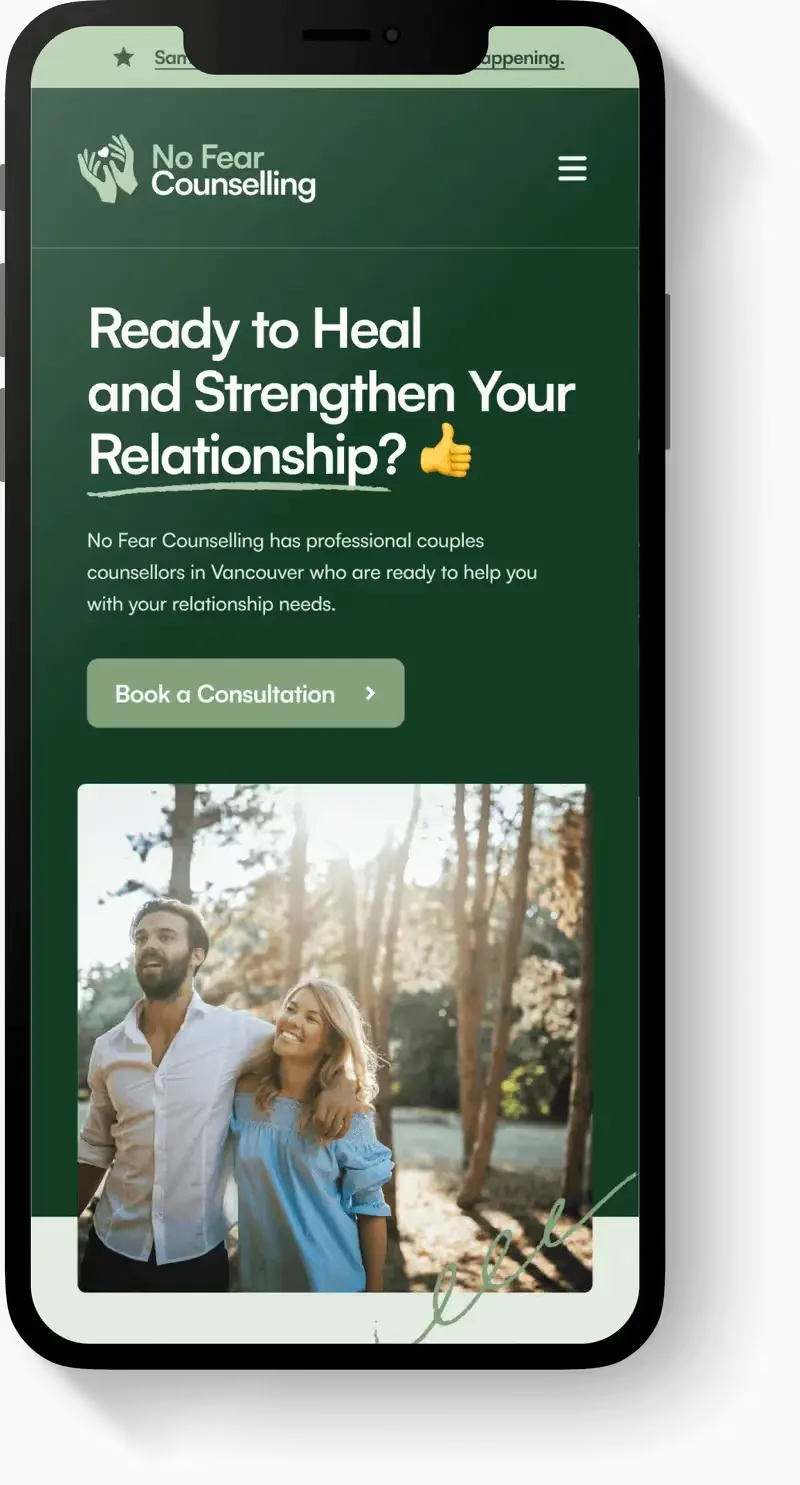
We agreed on a professional, supportive tone before developing the visual design. The palette used forest greens, neutrals and warm greys, with typography and page structure intended to keep the service information clear. The colour research informed those choices without replacing the need to review how the interface worked.
From there, we built out a flexible design system tailored for therapy-specific use cases. For example:
- Mobile-first navigation for users in crisis who may be using their phone
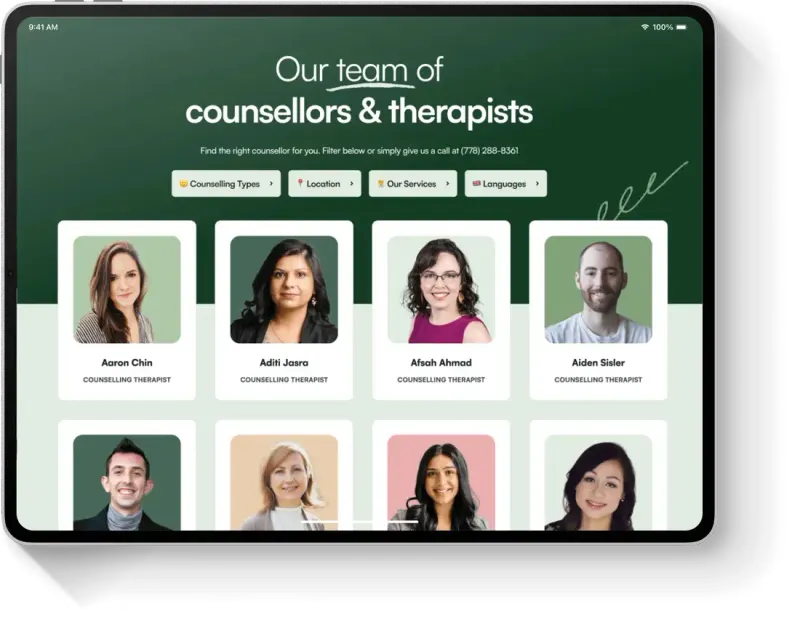
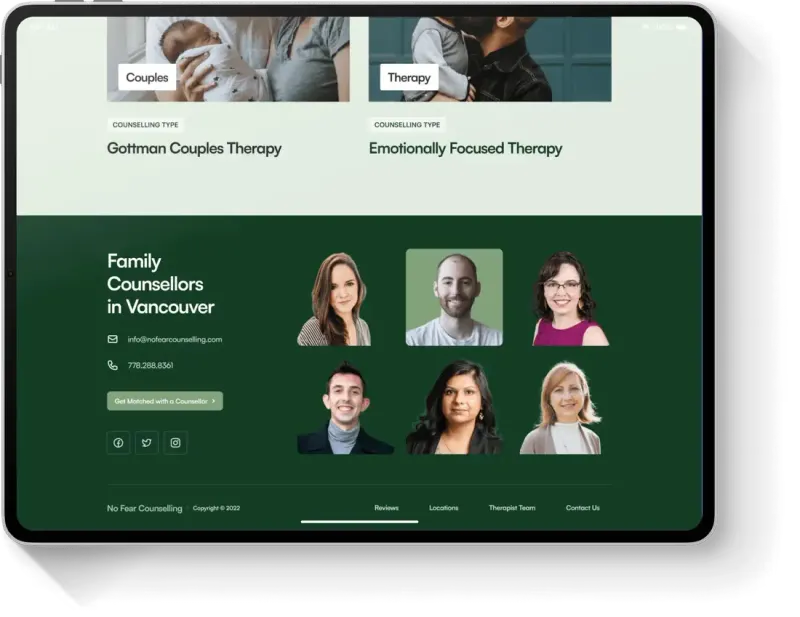
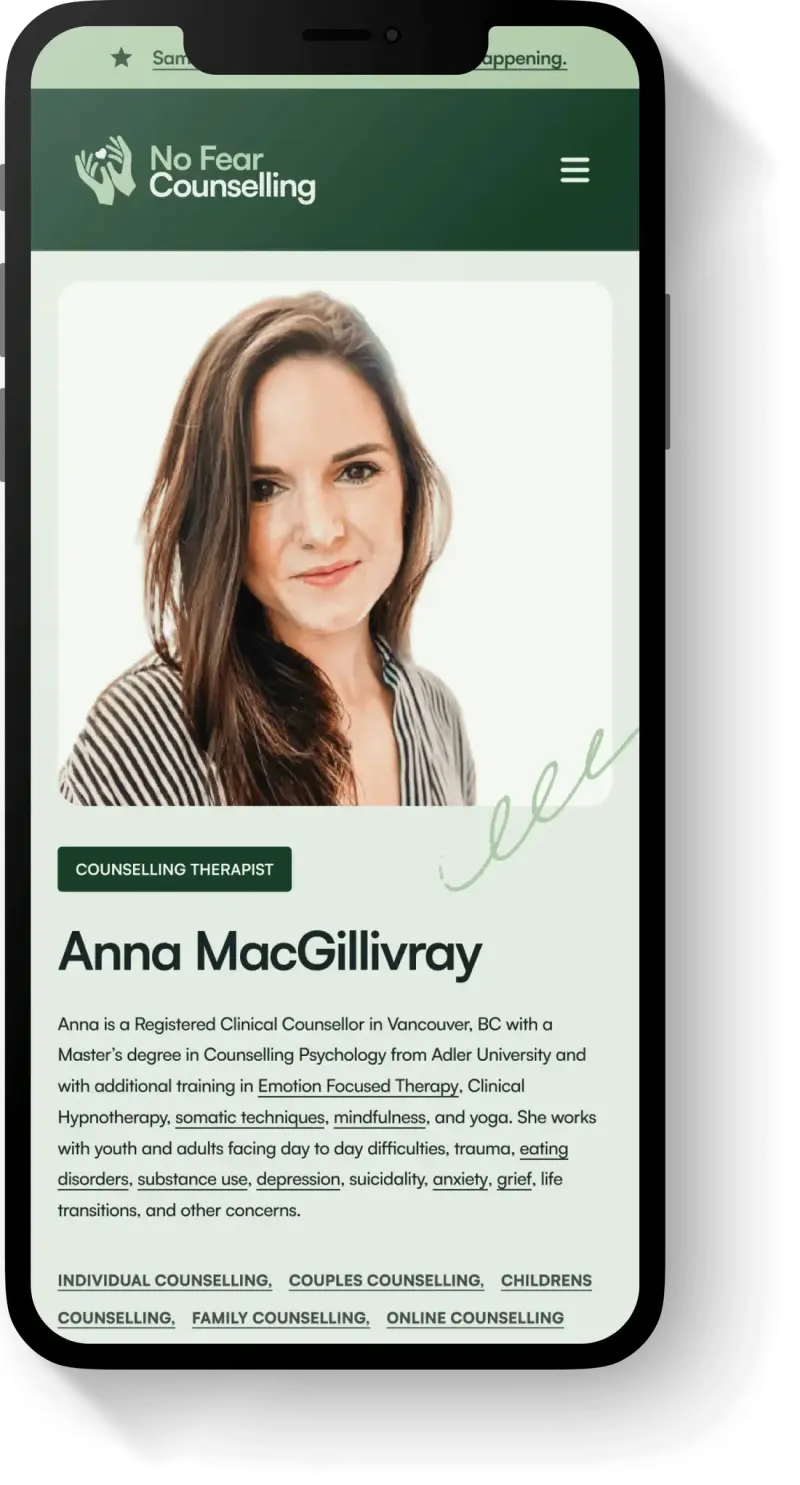
- Profile cards that allowed users to easily scan therapists by modality, background, and languages spoken
- Conversational CTAs like “Ready to talk?” instead of generic buttons like “Submit”
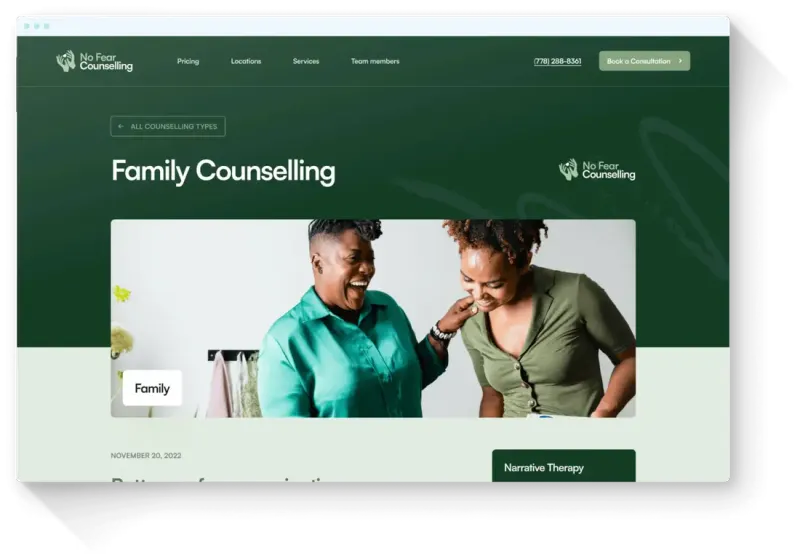
We selected imagery that felt appropriate to the people and services represented by the clinic. It needed to work alongside the therapist profiles and content, giving the site a more consistent presentation without relying on generic clinical stock photographs.
Execution & Deliverables
We rebuilt the site in Webflow, giving the clinic a way to manage its service content, therapist directory and location pages. The build was reviewed against the project’s privacy and accessibility requirements as the pages and forms were developed.
Deliverables included:
- A fully responsive, WCAG 2.1 compliant website
- HIPAA-aware form integrations for bookings and contact
- Branded therapist profile directory with filtering
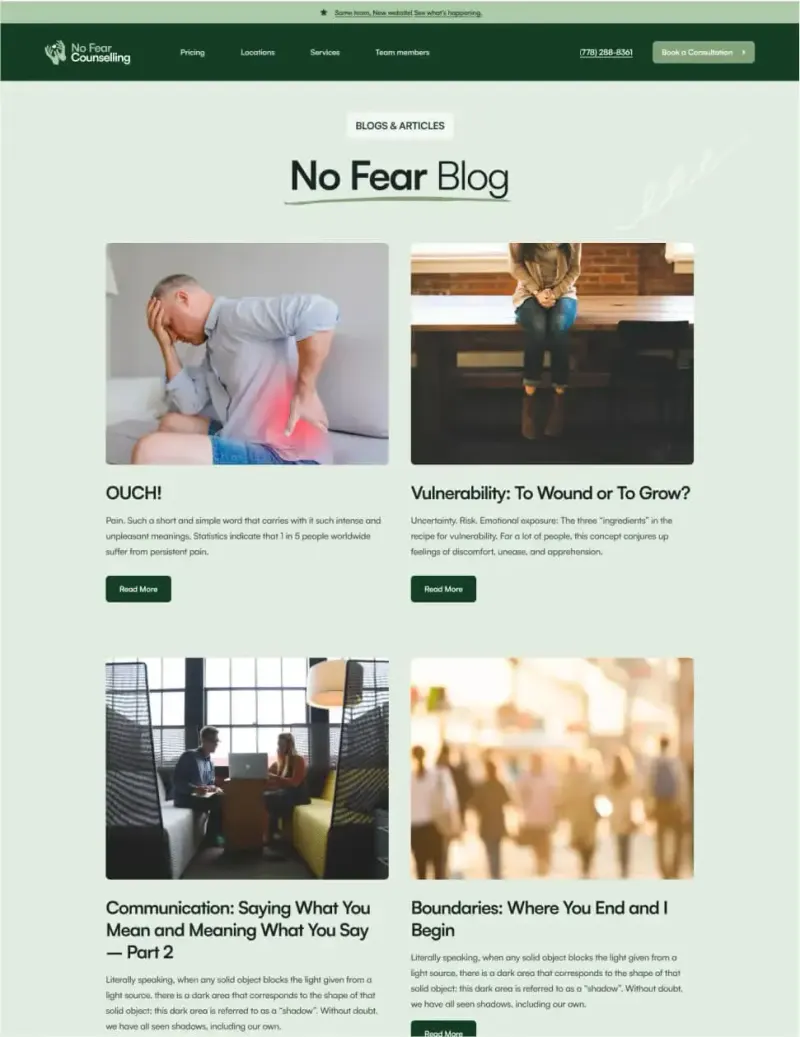
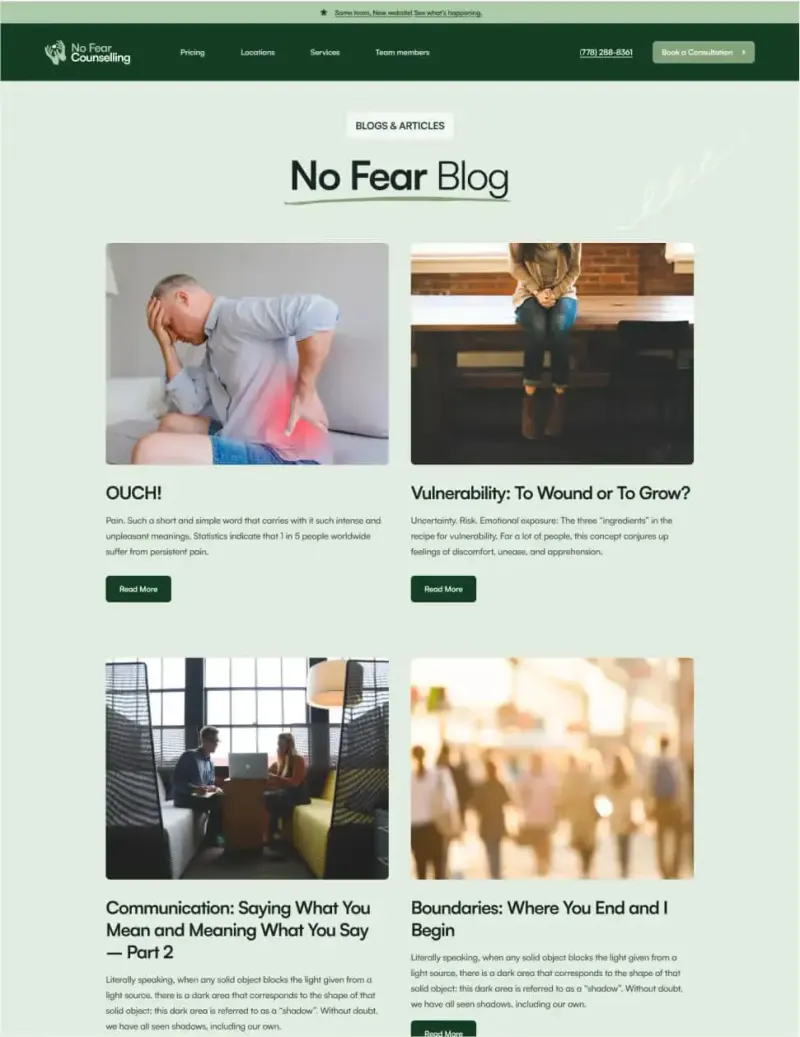
- Custom “No Fear Blog” hub for mental health content
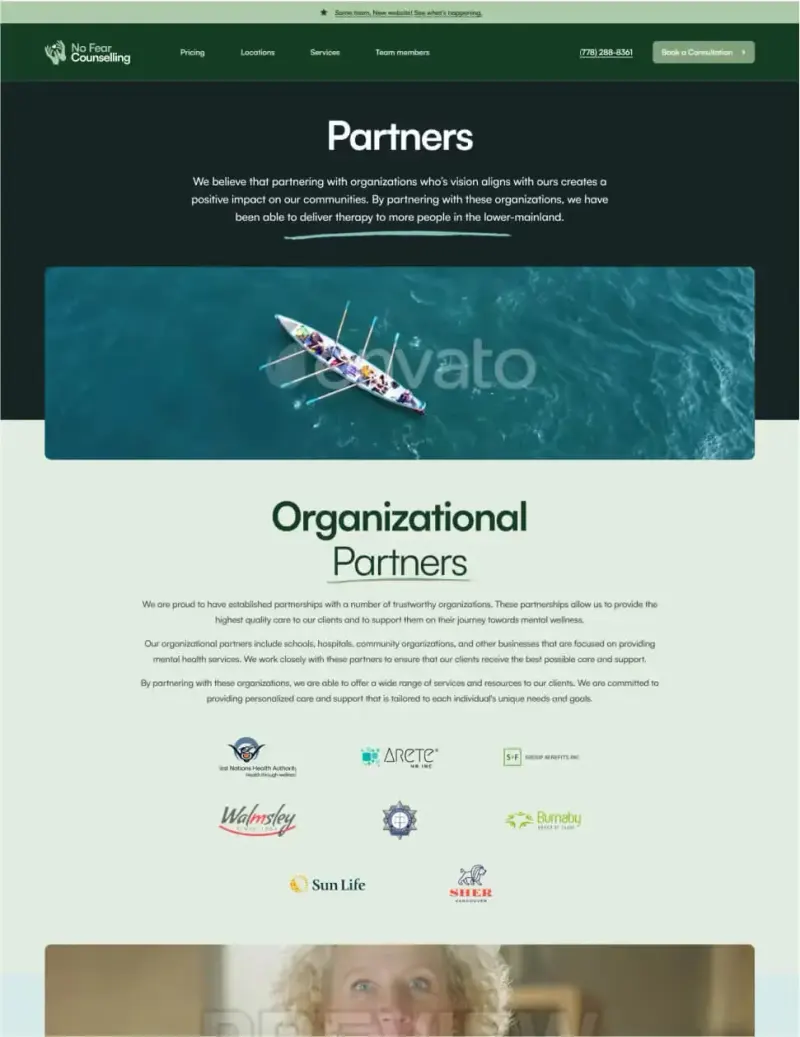
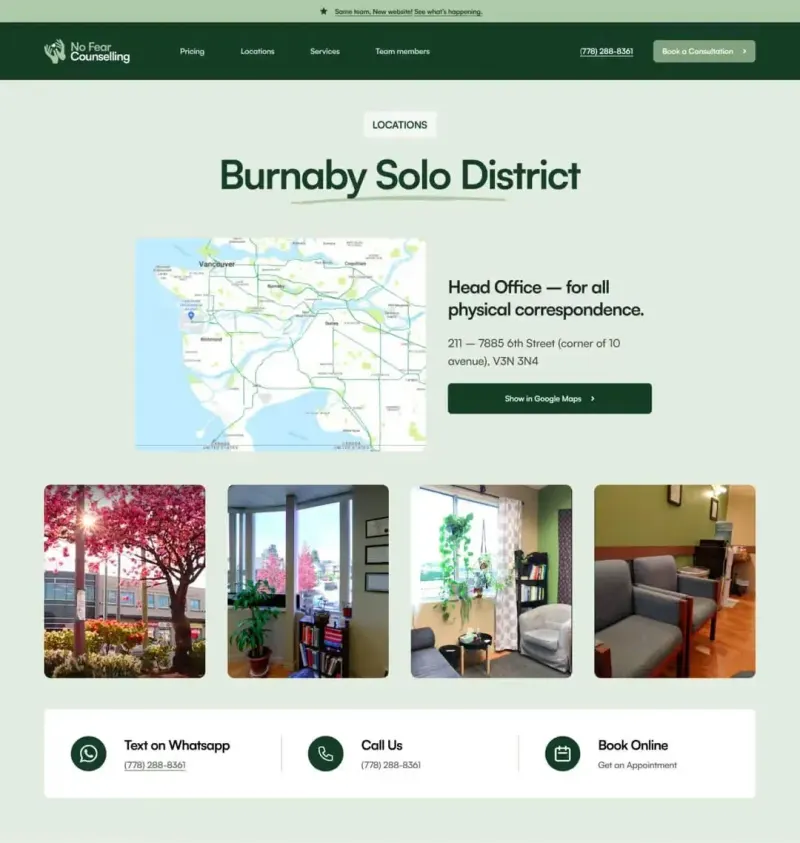
- Scalable landing page templates for clinic locations and partner services
We connected the booking flows with CRM tagging, email reminders and service-specific follow-up through our Marketing Lab™ tools. This gave the clinic a way to manage communications after an inquiry or booking and review where users encountered difficulty in the process.
Tangible Outcomes
The post-launch reporting recorded the following changes:
+200% increase in online bookings
Appointments scheduled through the website increased threefold after the combined booking, content and layout work.
+60% improvement in conversion rates
Users were completing their booking flows at much higher rates thanks to simplified paths, clearer service descriptions, and lower friction points.
+85% mobile engagement growth
The accessibility-first mobile design led to a major lift in mobile session duration, scroll depth, and page interaction.
-40% bounce rate
By reworking the layout, removing dense jargon, and improving page speed, more visitors stayed, explored, and took action.
Patient satisfaction scores averaged 4.8/5
The post-launch feedback recorded this average from clients using the platform, alongside the booking, conversion and engagement measures.
Lessons Learned & What’s Next
The practical improvements came from the information and interaction choices: clearer profiles, simpler language, usable navigation and a more direct booking route. Each needed to be considered in the context of someone trying to understand a therapy service and decide whether to contact the clinic.
We worked with No Fear Counselling on a custom healthcare website that presented the team and services more clearly. The design, directory and booking flow gave people a more organized way to explore the available care, with tools the clinic could keep updating as its practitioners and locations changed.
For other clinics, therapist networks, or healthcare providers looking to modernize their digital experience, the path is clear:
- Start with your users
- Simplify their journey
- Make every interaction feel safe and intentional
Ready to Reimagine Your Mental Health Website?
Explore our web design services or book a Growth Strategy call to discuss your clinic’s website, service information and booking process.
Project FAQs
How does healthcare web design improve patient booking rates?
A well-structured healthcare website removes barriers to booking by simplifying navigation, clarifying services, and using conversion-focused layouts. In this case, our redesigned booking system helped increase online appointments by 200% through clear CTAs and reduced friction.
What makes therapist website design different from other industries?
Therapist websites must balance trust, privacy, and emotional safety. Unlike retail or SaaS, design choices here affect whether someone feels comfortable seeking help. Our UX approach prioritizes warmth, clarity, and accessibility for therapy clients.
Why is ADA-compliant or accessible web design important in mental health?
Accessible web design ensures that users with disabilities or cognitive challenges can access mental health support. WCAG 2.1 compliance helps clinics meet legal standards while also building inclusive platforms that serve diverse client needs.
What is marketing automation for mental health clinics?
Marketing automation in this space simplifies follow-ups, appointment reminders, and lead nurturing while protecting client privacy. We use tools that integrate securely with booking systems and CRMs to improve conversion without adding manual admin work.
How do I get started with Setsail Marketing?
Book a Growth Strategy call with Setsail Marketing to discuss your healthcare website. We’ll review the services, users, practitioner information, booking tools and accessibility requirements before recommending the design and development scope for your clinic.