Branding, Web Development and Marketing Automation for CleanDesign

Our work for CleanDesign
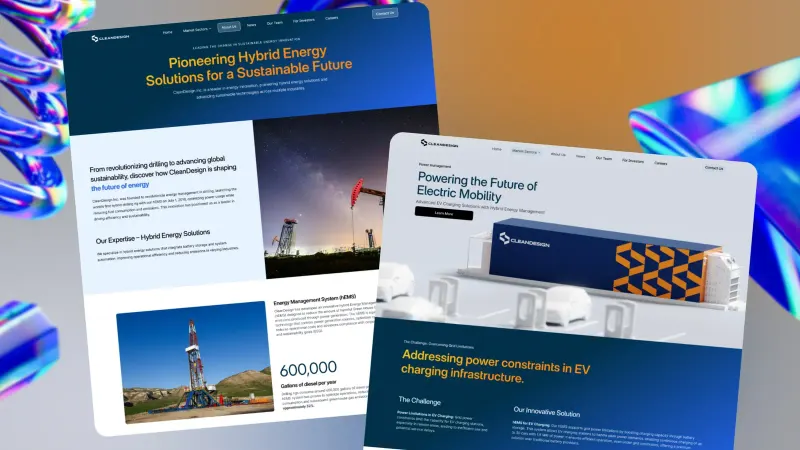
CleanDesign’s hybrid energy systems needed to make sense to several audiences: engineers assessing the technology, executives reviewing the economics and investors considering the business. We developed the brand, built a Webflow website and created 3D visuals that showed how the system worked. CRM-connected lead capture and email automation supported follow-up after a website visit. The project gave CleanDesign a consistent way to explain the technology and manage interest, with a reported threefold increase in website traffic in the weeks after launch.
A clear identity for a technical company
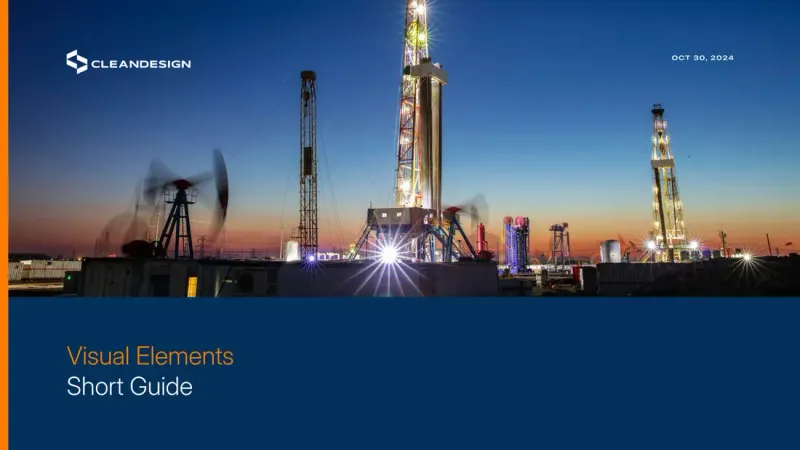
We developed an identity and visual system for CleanDesign’s technical and investor audiences. The work made the company’s presentation more consistent while giving its team a clearer way to introduce the hybrid energy system in sales and investment discussions.
A Webflow website with practical product information
We built a mobile-first website explaining the system through benefits such as fuel-cost savings and emissions reduction. Plain-language content and 3D visuals helped visitors work through the product, with clear routes for starting a conversation.
Lead capture and automated follow-up
We connected website lead capture with CleanDesign’s CRM and created email sequences triggered by site interactions. Relevant follow-up could happen without the team manually sending every message, leaving more time for discussions with clients and investors.
Explaining CleanDesign’s hybrid energy systems
Branding & Digital Marketing Challenge for Clean Tech
CleanDesign had developed a hybrid energy management system for operations that need dependable power, including remote mining sites, oil and gas operations, and communities far from the grid. The system was designed to cut fuel costs and emissions. Explaining how it worked was the marketing challenge: it was complex, highly technical, and difficult to communicate to investors and clients.
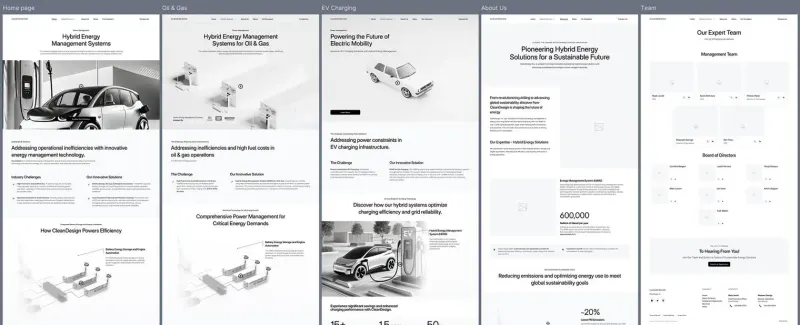
The website needed to serve engineers looking for specifications, executives considering ROI and investors assessing the company. CleanDesign had no consistent brand identity, central website or marketing system for generating and following up on leads. We needed a clear digital strategy that presented the technology accurately while giving each audience enough context to decide whether to talk to the team.
Strategy: Website Design, Branding & Marketing Automation
Our strategy revolved around one idea: make the complex simple. CleanDesign had a powerful solution, but unless people could quickly understand it, the value was lost. We broke the project down into four pillars:
- Brand Identity: Build a visual system that conveys clarity, modernity, and trust.
- 3D Visualization: Use models and animations to turn engineering complexity into visuals people could instantly understand.
- Website Development: Create a professional, mobile-first website built to convert interest into qualified conversations.
- Marketing Automation: Set up scalable automation so every lead could be nurtured without extra workload for the team.
The website and automation were planned as a system for managing interest. Product content would help people understand the offer, while lead forms and CRM-connected follow-up gave the team a way to respond to that interest after the visit.
Creative Process in Branding & 3D Visualization
We spoke with CleanDesign’s leadership, engineers and business development team about how the system worked and how they explained it to prospects. We also reviewed industry benchmarks and the presentation of similar technologies. The content needed to retain enough technical detail for engineers while making the main application and value understandable to business decision-makers.
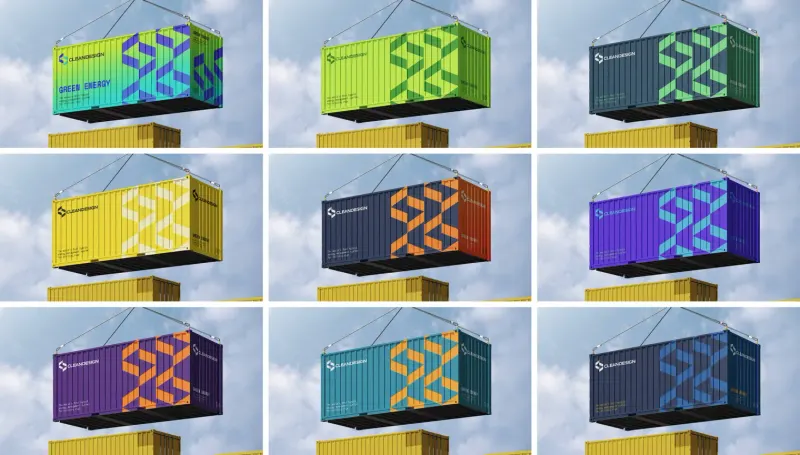
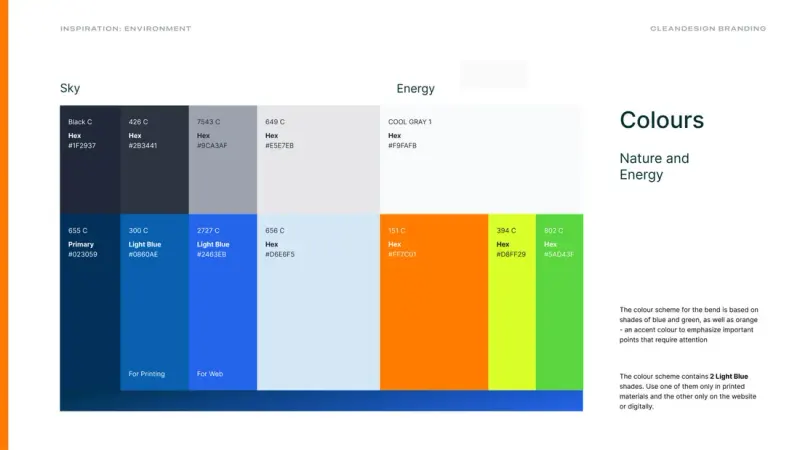
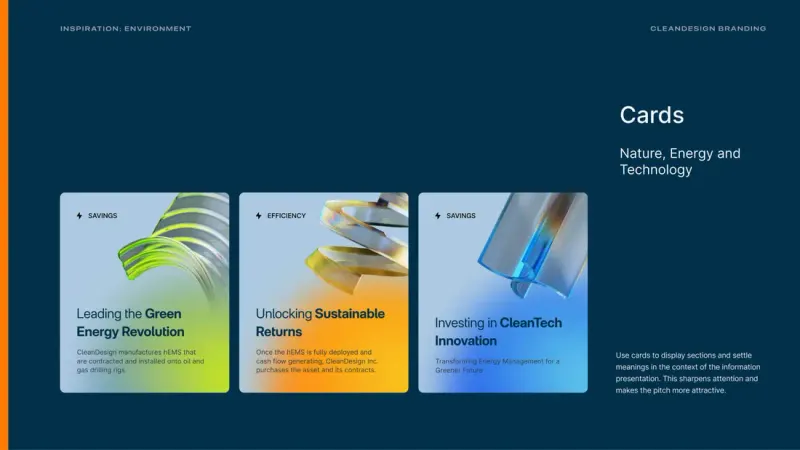
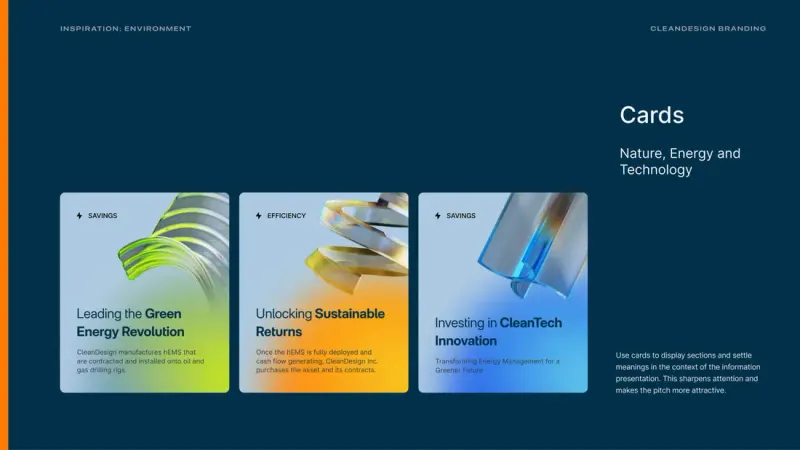
For branding, we focused on simplicity. We designed a logo system and visual identity that communicated modern engineering precision while staying approachable. The colour palette leaned toward clean, professional tones that aligned with the “clean” in CleanDesign. Typography choices reinforced trust and legibility across web and print.
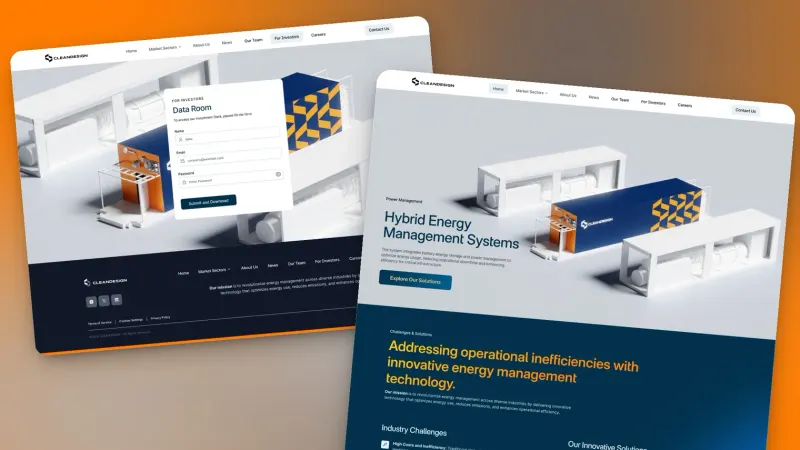
At the same time, our design team worked on 3D models of CleanDesign’s hybrid energy system. Instead of relying on complicated diagrams or text-heavy PDFs, we produced visuals that showed how battery storage, generators, and smart controls integrated together. These became central not only to the website but also to pitch decks and investor conversations.
Execution: Website Development, Automation & 3D Models
From there, we moved into execution.
- Branding: Delivered a full identity package including logo, brand guidelines, and templates for decks and communications.
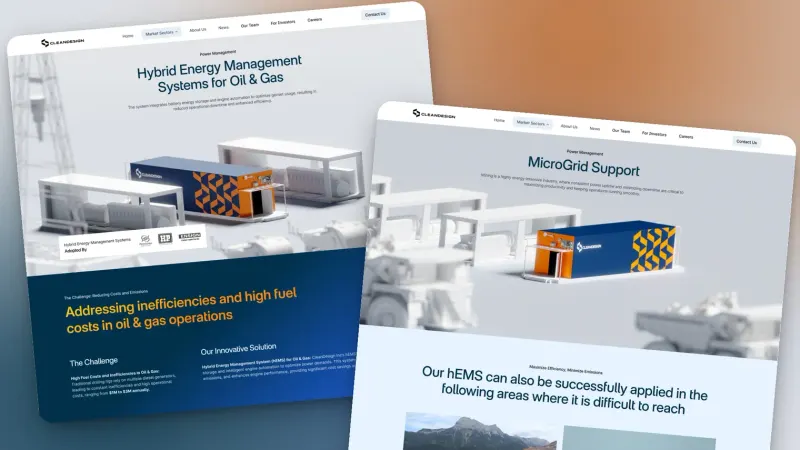
- Website: Designed and developed a responsive, modern site that distilled technical features into simple benefit-driven language. We made sure the site highlighted fuel cost savings, CO₂ reduction, and operational reliability, because those were the factors executives cared about. The website was developed in Webflow, ensuring CleanDesign could easily manage updates without relying on custom code.
- 3D Visualization: Created a library of visuals that explained CleanDesign’s systems in action. These assets were embedded in the site and also used for marketing collateral and automation campaigns.
- Marketing Automation: Built lead capture flows that connected directly into their CRM. We set up automated email sequences triggered by site interactions, ensuring prospects received relevant follow-up without requiring manual effort.
We also implemented analytics and tracking across the website and campaigns, giving CleanDesign the data to see where leads were coming from and how they moved through the funnel.
Outcomes: Branding, Website Traffic & Lead Generation
The results were immediate. Within weeks of launch:
- Website traffic increased 3x in the weeks after launch, as reported for the project.
- Leads began converting directly from the website, something that wasn’t happening before.
- Investors commented that the new 3D visuals made it “finally easy to understand” what the system did.
- With automation in place, CleanDesign’s team could focus on conversations instead of chasing down inquiries manually.
The CleanDesign team had a more consistent set of materials for business development: a website, 3D product visuals and a professional presentation for enterprise discussions. Those materials supported conversations with clients and investors, alongside the lead-generation and follow-up tools delivered in the same project.
Lessons Learned in Clean Tech Marketing & Next Steps
The useful lesson from this project was the role of visual explanation in a technical sale. The 3D models showed the relationship between battery storage, generators and controls, while the written content explained why those relationships mattered. The same assets could be reused in the website, pitch decks and investor conversations, keeping the explanation consistent.
The brand, website and automation gave CleanDesign tools it could continue using as the company expanded. Further digital marketing, content and performance campaigns were possible next steps. Each would build on the product explanation and follow-up process already in place, with the tracking setup providing a way to assess where new inquiries came from.
Project FAQs
How does branding help clean tech companies attract investors?
Strong branding builds trust and credibility. For clean tech companies like CleanDesign, a clear identity reassures investors that the technology is backed by a professional team. Branding turns complex systems into simple, memorable stories that appeal to both technical and business audiences.
Why is website design important for energy and engineering firms?
A well-designed website helps energy and engineering firms explain technical solutions in plain language. It improves lead generation by guiding visitors to take action, while showcasing results like cost savings and efficiency. Clean, mobile-first design signals professionalism and builds credibility.
What role do 3D models play in marketing technical products?
3D models transform complex technology into visuals people can quickly understand. For CleanDesign, they made hybrid energy systems easier to explain to clients and investors. Visual storytelling increases engagement, reduces confusion, and helps companies stand out in competitive industries like clean tech.
How does marketing automation benefit clean tech startups?
For CleanDesign, website lead forms connected to the CRM and email sequences triggered by site interactions. That let relevant follow-up run without the team sending every message manually. The setup supported the sales conversation by keeping product information available after a visit.
How do I get started with Setsail Marketing?
Book a Growth Strategy call with Setsail Marketing to discuss your technology, audiences and sales process. We can review where prospects need a clearer explanation and what your team needs for follow-up, then recommend a scope across branding, website design, visual content and marketing automation.