
TL;DR
- BrightLocal is the default local SEO software tools choice for businesses needing local rankings, citation audits and reporting.
- Google Business Profile is the starting point for managing how an eligible business appears on Google Search and Maps.
- Local Falcon suits geographic rank checks; Whitespark suits citation research; Google Search Console explains website search performance.
- Setsail Marketing connects customer research, local SEO execution and reporting to enquiries, booked work and revenue.
Why this matters
A Vancouver customer searching for a nearby service needs more than a visible map listing. They need the right service, convincing proof and a clear next step. Software helps you spot gaps; someone still needs to correct the information, improve the website and follow through on enquiries.
Setsail Marketing approaches local SEO through how customers discover, compare, trust and choose a business. That changes which tools deserve attention: ranking software answers a different question from customer research or sales reporting.
For your 2026 shortlist, separate the software decision from the marketing decision. Choose the tool that reveals a problem you can act on, then judge the work against qualified enquiries and sales—not dashboard activity alone.
What makes the best local SEO software tools?
Use these criteria before comparing features:
The best tool is the one that helps you make a useful decision and complete the next action. A larger feature set does not resolve an unclear business problem.
Local SEO software tools at a glance
The order below reflects a practical 2026 buying sequence: consider a dedicated local platform, establish your Google presence, then add specialist tools where a specific gap remains.
BrightLocal
- Best for: Combined local SEO monitoring
- Standout capability: Local rank tracking and citation auditing
- Key limitation: Findings still require implementation
Google Business Profile
- Best for: Managing your Google business presence
- Standout capability: Business details on Search and Maps
- Key limitation: Does not diagnose your whole website
Local Falcon
- Best for: Geographic map-ranking checks
- Standout capability: Geo-grid views of local visibility
- Key limitation: Rankings alone do not explain enquiry quality
Whitespark
- Best for: Citation opportunity research
- Standout capability: Finding business directory opportunities
- Key limitation: Citation work is only part of local SEO
Google Search Console
- Best for: Understanding website search performance
- Standout capability: Google query, page and indexing reports
- Key limitation: Not a local map-grid tracker
Semrush
- Best for: Connecting local work with broader SEO
- Standout capability: Keyword and competitor research
- Key limitation: Broader scope requires a defined workflow
1. BrightLocal: best for combined local SEO monitoring
BrightLocal brings local rank tracking, citation auditing and reporting into a dedicated local SEO platform. It suits a business or marketing team that wants to review several local visibility tasks together rather than assemble disconnected reports.
Start with a clear location and service scope. A Vancouver business should distinguish searches for its actual services from broad terms that attract people outside its target market.
BrightLocal pros:
- Combines several local SEO monitoring tasks.
- Helps identify citation inconsistencies for investigation.
- Supports a repeatable local reporting workflow.
BrightLocal cons:
- An audit does not correct the underlying website or business information by itself.
- Visibility reports need enquiry and sales context before they support commercial conclusions.
Best for: Businesses and teams that need a central place to monitor local rankings and citation issues.
Verdict: Buy if combined local monitoring is your main requirement. Skip the extra platform if nobody will own the resulting actions.
2. Google Business Profile: best for your Google presence
Google Business Profile lets eligible businesses manage information that appears on Google Search and Maps. Business details, categories, photos and review responses help customers assess whether an organisation fits their needs.
Treat profile accuracy as operational work, not a one-time setup. Incorrect hours or an unsuitable category create problems that a separate ranking dashboard cannot solve.
Google Business Profile pros:
- Gives you direct control over important business information submitted to Google.
- Supports photos and responses to customer reviews.
- Provides performance information about interactions with your profile.
Google Business Profile cons:
- Eligibility and representation must follow Google's business guidelines.
- Profile reporting does not replace website analytics or sales records.
Best for: Eligible organisations that need to establish or maintain their presence on Google Search and Maps.
For 2026, make profile ownership and accuracy a prerequisite to adding specialist software. Confirm who can make changes and who checks that those changes reflect the business.
Verdict: Buy into the workflow first. Use Google Business Profile as a foundation, not as your entire local marketing strategy.
3. Local Falcon: best for geographic map-ranking checks
Local Falcon uses geo-grid rank tracking to show local search visibility across different geographic points. That helps you examine the difference between visibility near your premises and visibility in another part of your service area.
For example, a Vancouver service business can investigate whether the same search produces different map positions across the neighbourhoods it serves. The grid identifies a pattern; it does not establish the cause.
Local Falcon pros:
- Makes geographic ranking differences easier to inspect.
- Helps you monitor selected service searches across a defined area.
- Gives local ranking discussions more context than a single search location.
Local Falcon cons:
- Results depend on the search terms and geographic points selected.
- Map positions do not show whether enquiries became profitable work.
Best for: Businesses investigating uneven map visibility across their actual service area.
Before comparing scans, keep the query and geographic setup consistent. Otherwise, you risk interpreting a changed measurement setup as a changed result.
Verdict: Buy when geographic visibility is the question. Hold if your immediate problem is inaccurate business information or an ineffective enquiry page.
4. Whitespark: best for citation opportunity research
Whitespark's Local Citation Finder helps identify places where businesses are mentioned or listed online. A citation is a reference to a business, commonly including its name, address and phone number.
Use citation research to investigate relevant directories and inconsistent business details. Do not treat every available directory as a worthwhile destination.
Whitespark pros:
Whitespark cons:
- Directory relevance and suitability still require judgement.
- Citation work does not replace stronger service pages, customer proof or enquiry handling.
Best for: Businesses with a specific citation research or cleanup requirement.
For a 2026 directory review, assess whether the listing fits your geography, services and customers. Keep the business information consistent with the organisation's actual details and Google's applicable guidelines.
Verdict: Buy for a defined citation project. Skip indiscriminate directory submissions that have no clear relevance to your business.
5. Google Search Console: best for website search performance
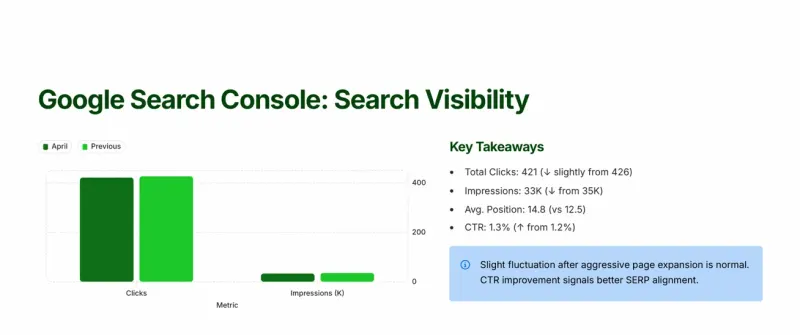
Google Search Console reports how a website performs in Google Search, including queries, pages, impressions and clicks. Its indexing information also helps you investigate whether Google can find and index important pages.
This is where you examine whether service pages appear for relevant searches and whether searchers click through. It answers a different question from a map-ranking grid.
Google Search Console pros:
- Provides search performance data directly from Google.
- Connects queries with the pages receiving visibility and clicks.
- Helps investigate indexing problems affecting important website pages.
Google Search Console cons:
- Does not provide a neighbourhood-by-neighbourhood map-ranking grid.
- Search clicks alone do not identify qualified enquiries or completed sales.
Best for: Organisations that need to understand their website's Google Search visibility.
Compare search intent with page content. If a page attracts research questions but your goal is quote requests, investigate the page's purpose before celebrating its traffic.
Verdict: Buy into regular use. Keep Google Search Console alongside local reporting rather than expecting either source to answer every question.
6. Semrush: best for broader SEO research
Semrush supports keyword research, competitor research and website auditing. It fits teams whose local visibility work forms part of a wider website and content programme.
Use it to investigate how prospective customers describe a problem and which pages compete for related searches. Then check those findings against customer conversations and your actual services.
Semrush pros:
- Connects keyword research with broader website analysis.
- Helps investigate competing pages and content gaps.
- Supports SEO work beyond a single business listing.
Semrush cons:
- Its wider scope needs priorities to avoid unfocused reporting.
- Third-party estimates are not your business's actual enquiries or revenue.
Best for: Marketing teams coordinating local SEO with broader content and website work.
Check the precise features included in the configuration you are considering. A broad platform name does not establish that every specialist local task is covered.
Verdict: Buy when broader SEO research is part of the job. Hold if your only unresolved task is managing your Google business details.
How these tools were ranked
This shortlist ranks tools by task fit, geographic usefulness, actionable output, reporting clarity and workflow requirements. It is a selection guide, not a claim of controlled performance testing.
BrightLocal is the default combined local monitoring choice. The remaining tools own distinct jobs, so a lower position does not mean a weaker product for that particular task. No software receives credit here for guaranteeing rankings, enquiries or revenue.
Turn software findings into booked work
Use a small, repeatable workflow for your 2026 tool evaluation. Start with 5 search terms customers genuinely use and 3 search locations within your service area; these are suggested review inputs, not performance benchmarks.
Reporting should lead to a decision and an assigned action.
Setsail Marketing carries customer research through local SEO strategy, creative, technology and in-house execution. The strategists remain involved during delivery, and reporting compares projected with actual results, including shortfalls.
If you need that connection, Book a Growth Strategy call. The call is free, lasts 30 minutes and carries no commitment. A subsequent researched Growth Strategy is a separate paid engagement; its fixed 90-day plan supports delivery rather than replacing customer understanding. Projections are estimates, not guarantees.
Book a Growth Strategy call
A free, 30-minute call about your goals, challenges and next steps. No commitment.
Which local SEO software tools should you choose?
Choose BrightLocal if you need a default platform for combined local SEO monitoring. Start with Google Business Profile if your basic Google presence needs attention, then add specialist tools only when you can name the unresolved question.
Choose Local Falcon for geographic ranking patterns, Whitespark for citation research, Google Search Console for website search performance and Semrush for broader SEO research. Avoid assembling overlapping subscriptions before assigning responsibility for the work.
Setsail Marketing is best for organisations that want customer understanding carried through local SEO execution and measurement, rather than a software dashboard alone.
FAQ
What's the best local SEO software for a business with one location?
BrightLocal is the default choice here for combined local monitoring. Establish accurate Google Business Profile information first, then decide whether rankings, citations or website performance need additional investigation.
Do I need local SEO software if I already use Google Business Profile?
You need another tool only when Google Business Profile leaves a specific question unanswered. Geographic ranking checks, citation research and website indexing each require different information.
Is Local Falcon better than BrightLocal?
Local Falcon is the specialist choice here for geographic map-ranking checks; BrightLocal is the default for combined local monitoring. Choose by the task rather than treating the products as interchangeable.
Can local SEO software guarantee more enquiries?
Local SEO software cannot guarantee more enquiries. Results also depend on customer demand, your offer, website quality, proof and how your team handles incoming enquiries.
Can I use Google Search Console to track Google Maps rankings?
Google Search Console is not a neighbourhood map-ranking tracker. Use it to investigate your website's Google Search performance and indexing, and use a geo-grid tool for geographic map-ranking checks.
Should I buy every tool on this list?
No—choose the smallest set that answers your actual business questions. Add another tool only when its findings support a decision and someone owns the follow-up work.
Can an agency manage the work instead of just supplying reports?
Yes. Setsail Marketing connects customer research with strategy and in-house delivery, then compares projected and actual results against agreed business goals.
One last thing
Before your next software renewal, open the previous report and identify the decision it changed. If nothing changed, fix the reporting workflow before adding another tool. A useful report should tell you what happened, what remains uncertain and what someone will do next.
Related guides
- What a Vancouver SEO agency should report each month
- What access a Vancouver SEO agency actually needs
- What happens to your assets when you leave a marketing agency