


Video Production Process: Guide for Marketing Teams
A complete guide to the video production process from pre production strategy to post production delivery, so your marketing team can execute with confidence.

Jason Atakhanov
12 mins
September 28, 2026
You know video should be doing more of the heavy lifting in your marketing. Maybe your council wants a public safety campaign on social, or your sales team keeps asking for a clear product walkthrough. You sit down to brief a shoot and suddenly everyone has opinions: script, locations, talent, animation, multiple versions for different channels… and the whole thing starts to feel messy.
What you really need is a shared, repeatable way of working so your team, leadership, and creative partners all understand how ideas turn into finished assets. A defined video production process gives you structure, keeps quality high, and ties every scene back to your goals.

TL;DR:
The stages of video production break into three big buckets: pre production (strategy, script, logistics), production (capturing footage), and post production (editing and finishing). When you treat each stage as a chance to lock in decisions and protect your budget, you get better videos and fewer last minute surprises.
Why a repeatable process matters for marketing teams
Most marketing leaders don’t struggle with ideas; they struggle with execution that stays on brief, hits deadlines, and can be measured against real outcomes. Because video adds crew, gear, schedules, talent, permits, and media specs, the risk of drift is higher. A clear workflow keeps you out of “endless revision” territory by giving everyone from your communications lead to your videographer a shared checklist and language. At Setsail, we connect each project’s stages to campaign goals, channel strategy, and KPIs so your brand film, explainer, or recruitment video supports actual results, not just views.
That same structure helped the City of Prince George run an economic development campaign that reached 750,000+ people, generated $50M+ in recorded investment interest, and produced 200+ reusable assets see the full breakdown in our Prince George case study.
If you’re just starting to invest in production, it helps to line this guide up with your broader digital marketing strategy so every shoot slots into a bigger plan rather than becoming a one off.
Overview: the three stages of video production
Every project is different, but the classic stages of video production stay the same:
- Pre production: goals, messaging, script, storyboard, shot list, schedule, and logistics.
- Production: cameras roll; you capture interviews, b‑roll, voiceover, and onscreen action.
- Post production: editing, motion graphics, music, colour, captions, formats, and final exports.
Pre-production → Production → Post-production
Whether you’re filming a 15 second vertical ad or a three minute story for your city’s microsite, the same structure applies. The rest of this guide walks through each stage and how it fits alongside your other campaigns so your video production process feels repeatable instead of ad hoc.
If you’d like to compare your workflow with other teams, you can also review Vimeo’s video production process guide. For a deeper look at how this ties into measurement and ROI, pair this article with the ROI Framework section on our About page.
Stage 1: Pre production (planning and prep)
Pre production is where most of the risk is either removed or baked in. Time spent here saves you from overtime on set and endless edits later.
Clarify goals, audience, and messaging
Before anyone writes a line of script, agree on three things:
- Goal: What does success look like more sign‑ups, safer behaviour, higher recall, lower support tickets?
- Audience: Who are you talking to, and what do they care about right now?
- Single core message: If viewers remember one idea, what should it be?
These decisions guide tone, format, and length. A recruitment video for trades workers, for instance, will feel very different from a polished explainer for a government portal update.
Script, structure, and storyboard
With goals set, your team (or agency) writes the script and shapes the story arc. For live action projects, that often means a simple script paired with notes on what appears on screen. For animation or more complex shoots, we also build a storyboard to show composition, pacing, and transitions.
This is also the right moment to confirm:
- Approximate length (for example, 6 second, 15 second, 30 second, or longer formats).
- Primary channels (YouTube, Meta, LinkedIn, your website, transit screens, etc.).
- Mandatory elements: logos, legal text, URLs, QR codes, or taglines.
For a more hands on guide to briefing and expectations, see our piece on how to brief a creative agency.
Shot list, locations, and logistics
Next, the creative plan turns into a production plan. Your producer typically creates:
- A shot list that spells out every angle and moment you need.
- A schedule or call sheet with times, crew, and talent details.
- A list of locations (office, job site, studio, council chamber, etc.).
- Notes on permissions and releases for on camera participants.
For municipal and utility clients, we often coordinate with communications and legal teams here to make sure signage, uniforms, and public spaces line up with internal guidelines.

Typical pre production deliverables
- Creative brief and goals summary.
- Approved script and storyboard.
- Shot list, schedule, and crew plan.
- Talent list and release forms.
- Equipment plan (cameras, lenses, lighting, audio).
Stage 2: Production (shoot day or capture day)
This is the stage most people picture when they think about making a video: cameras, lights, a director wearing headphones, and someone calling “action.” In a well run project, though, shoot days feel calm because all the big decisions were made during pre production.
On set or on location
The crew arrives with a clear plan and a schedule. Depending on the project, that might include:
- Director or producer overseeing story and performance.
- Camera operator and assistant (or multiple cameras).
- Sound recordist capturing clean dialogue and ambient sound.
- Gaffer or lighting lead shaping the look.
- Hair, makeup, or wardrobe for larger productions.
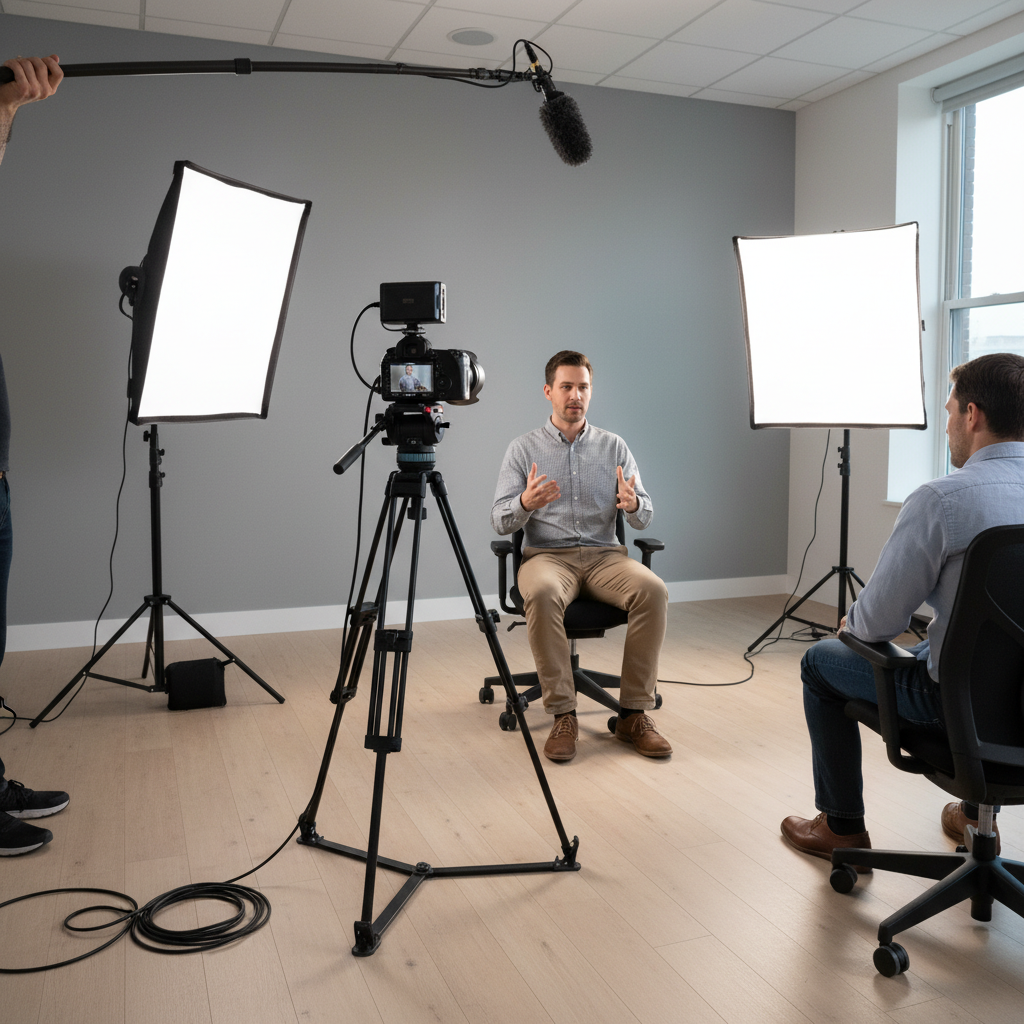
For smaller marketing shoots, one or two crew members may handle several of these roles. At Setsail’s in house studio in Vancouver, we often blend studio work with on location b‑roll to keep days efficient.
Capturing interviews, b‑roll, and alt versions
Good crews think beyond the main script. While you have people and spaces booked, it makes sense to capture:
- Interviews for future case studies.
- Extra b‑roll that can feed social clips and website headers.
- Clean logo shots and product details for future campaigns.
- Alternate lines or versions for different audiences.
Those extra few minutes of recording can pay off months later when you need a quick cutdown for a seasonal campaign. Combined with an AI video generator, this additional footage becomes even more valuable. Marketing teams can quickly transform existing interviews and b-roll into new campaign assets, social clips, recruitment videos, or localized versions without scheduling another shoot.
End of day checklist
Before the crew leaves, they confirm that all planned shots (plus backups) are captured, media is backed up, and the client contact is comfortable with what was filmed. From there, the project moves into post production.
Stage 3: Post production (editing, sound, and polish)
Post production turns raw footage into a story people want to watch. Editors, motion designers, and sound specialists collaborate here.
Rough cut and structure
First comes an assembly edit: the editor pieces together interviews, voiceover, and key visuals in the right order. At this stage, timing can still flex, and placeholders stand in for things like graphics and music. Once structure feels right, the piece moves to a rough cut for client review so you can confirm story, pacing, and messaging before anyone spends hours polishing small details.
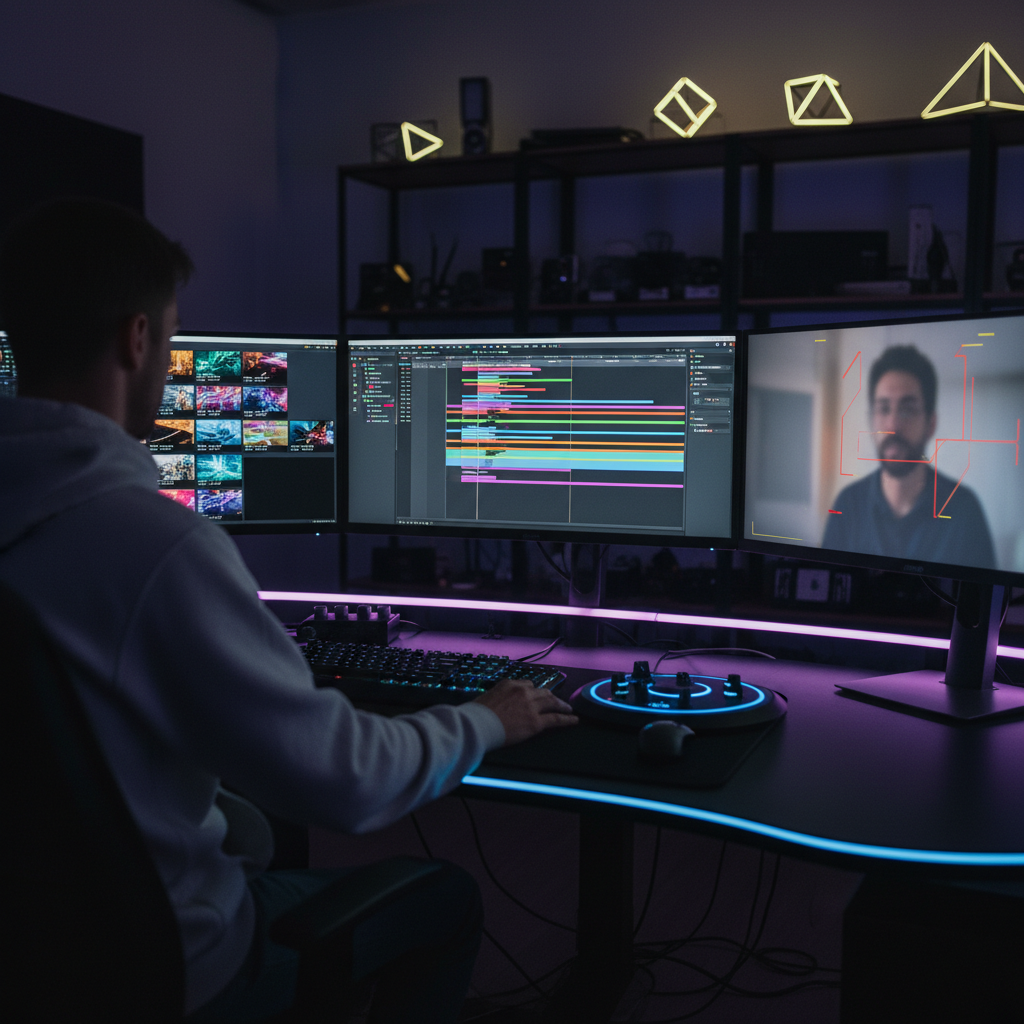
Graphics, music, color, and sound
After the rough cut is approved, the team adds finish:
- Motion graphics: titles, lower thirds, on screen stats, maps, diagrams.
- Brand layer: logo animation, color, and typography that match your visual identity.
- Music and sound design: licensed tracks, sound effects, and clean dialogue.
- Color grading: giving the footage a consistent look and feel, invideo editor can now handle color grading with AI right inside the timeline.
- Captions and accessibility: burned in or separate caption files.
This is also when we create videos with different aspect ratios and lengths for various placements, 16:9 for YouTube and your site, 1:1 or 4:5 for feeds, and 9:16 for Stories or Reels. For teams without a dedicated motion designer, a video generator can help produce quick social cuts, animated titles, or formatted versions without adding weeks to your post production timeline.
Final exports and asset handoff
At the end of post production, you should receive:
- Final approved video files in requested formats (for example, MP4 H.264 in multiple sizes).
- Caption files (SRT) and transcript, if requested.
- Working files and project archives, depending on your agreement.
- A simple usage guide: where to host, how to upload, and any media‑buy specs.
“Treat your edit as a living asset library, not a one and done file.”
When you think of the edit as a library, it becomes much easier to spin out future content without reshooting from scratch.
For upload and hosting best practices, platforms like Wistia’s video production guides offer useful technical checklists to pair with your creative plan.
Timelines, budgets, and approvals
How long does a typical video production process take? For most small to mid sized marketing projects, a realistic window is:
Typical timelines and deliverables for each stage of the video production
Budgets mainly scale with two factors: how many locations you’re filming in and how large a crew you need on set. To keep timelines realistic, agree upfront on the number of revision rounds per stage for example, two on script, one on rough cut, and one on final polish. That gives your internal team clear decision points.
To see how this connects with media buying and campaign planning, you can explore our paid media services and map production windows against your launch dates.
How to work with a video agency partner
If you don’t have an internal producer, look for a video agency that understands both creative and performance so they can keep the process moving and tie each project to results.
A strong partner will help you:
- Vision Mapping: quickly align audiences, desired behaviour change, and key messages.
- Marketing Lab testing: launch small, test hooks and formats, and scale what converts 140% average conversion‑rate improvement and 73% faster campaign deployment.
- Reporting: track leads, engagement, and how each video supports broader campaign goals.
When you evaluate partners, look for teams who talk in terms of measurable outcomes and collaborate smoothly with your internal team, council, or executive stakeholders. For more context on choosing partners, you may like our marketing agency guide.
FAQ
What are the main stages of video production?
Most projects follow three main stages of video production: pre production (planning), production (capturing footage), and post production (editing and delivery). Inside each stage are specific tasks, approvals, and deliverables that keep the project on track.
How early should we bring a video team into the project?
Bring your producer or agency in as soon as you have a clear objective and timeline. They can help shape the concept, script, and logistics so you don’t commit to a creative direction that is expensive or difficult to execute later.
How many versions of a video should we plan for?
Plan for one main “hero” video plus a few cutdowns or channel specific edits. For example, you might have a full explainer for your website, a shorter version for paid social, and a vertical version for Stories or Reels.
Where does animation fit into the workflow?
Animation usually sits in pre production and post production, after the concept, script, and storyboard are locked. Live action projects can also use animated titles, charts, or UI callouts to keep information clear.
How do we measure whether our video worked?
Link each video to specific KPIs such as form fills, sign ups, calls, time on page, or campaign outcomes, and combine hosting analytics (for example, YouTube Studio or Vimeo) with your ad and web analytics to see how it contributes across the funnel. Industry research from sources like Wyzowl and HubSpot shows that more than 80% of marketers say video has helped increase leads, sales, and web traffic, so it’s worth treating video as a measurable performance channel rather than a brand only tactic.
Jason Atakhanov
September 28, 2026
Recent Posts:

How to Build a Social Media Marketing Team for Growth
A step by step guide on how to build a social media marketing team, including hiring priorities, content operations, and performance tracking that gives an actual growth.
A Complete Guide to Corporate Video Production: Strategy, Process & ROI
Learn how corporate video production works, from strategy, storyboarding to filming, plus how to measure real ROI for your business.
Video Production Process: Guide for Marketing Teams
A complete guide to the video production process from pre production strategy to post production delivery, so your marketing team can execute with confidence.